
“Therefore you also must be ready, for the Son of Man is coming at an hour you do not expect.”
Matthew 24:44
We live in a time when people are constantly trying to predict the return of Jesus. Scripture tells us such predictions are fruitless.
There are also many theological debates about the meaning of this passage. I do not want to get into any of those. It is not that I am avoiding this wrought field of theology, it is that I don’t think the main point of this passage is related to the end times.
It is enough to know that Jesus will return and that we should be ready.
The question that interests me is, “What does it mean to be ready?”
Being ready is not studying current events and all the relevant biblical passages about the return of Jesus. Being ready is being about God’s work. As verse 46 says, “Blessed is that slave whom his master will find at work when he arrives.”
So, what is this work? What shows that we are ready?
Jesus gets really clear about this near the end of the next chapter when He discusses how, upon His return, He will separate the sheep from the goats. Those who receive Jesus’ blessing are those who feed the hungry, give drink to the thirsty, welcome the stranger, give clothing to the naked, care for the sick, and visit the imprisoned.
Works do not save. But those who have been saved, who have had their hearts and passions transformed to be like Christ’s, are those who show His love to those who, in worldly terms, do not deserve it.
Being ready for the return of Jesus is not about predicting His arrival time; it is about caring for people, the Imago Dei, the bearers of Christ’s image.
As Jesus said, “Truly I tell you, just as you did it to one of the least of these brothers and sisters of mine, you did it to me.”
A Quote to Consider:
“Honor thy error as a hidden intention.”
–Brian Eno
This is a quote that I use a lot when I teach. It is common for art students to make mistakes, which can be very frustrating when it comes to their artwork, especially for perfectionists.
Simultaneously, I often caution my more skilled students that they can “kill a work” by making it too perfect.
Humans are imperfect. Artwork that doesn’t in some way connect to that imperfect reality is often unconvincing. So, I want my students to consider embracing the mistake. Certainly, sometimes, maybe even often, mistakes need to be corrected, erased, or covered up. But I can also think of several artworks of mine where, after the work is complete, the mistake I let stand becomes my favorite part–a glimpse of my fallible humanity that I didn’t feel the need to hide.
In life, as in art, we make mistakes. Sometimes those mistakes are just blunders. Sometimes those mistakes are our subconscious telling us what is really important. Sometimes those mistakes were blunders that were so formative that we would be wise to embrace them or at least embrace the path down which they led.
To err is human. We all know that. Despite that, for many of us, our errors are a source of shame we seek to hide. Maybe we shouldn’t. Our errors are just as much a part of who we are as our successes.
Prayer:
Lord Jesus,
Keep us ready—not by chasing predictions, but by living Your love. Open our hands to serve the hungry, the stranger, the sick, and the forgotten, and teach us to see Your image in every person. And when we stumble, meet us with grace and shape us again.
Amen.
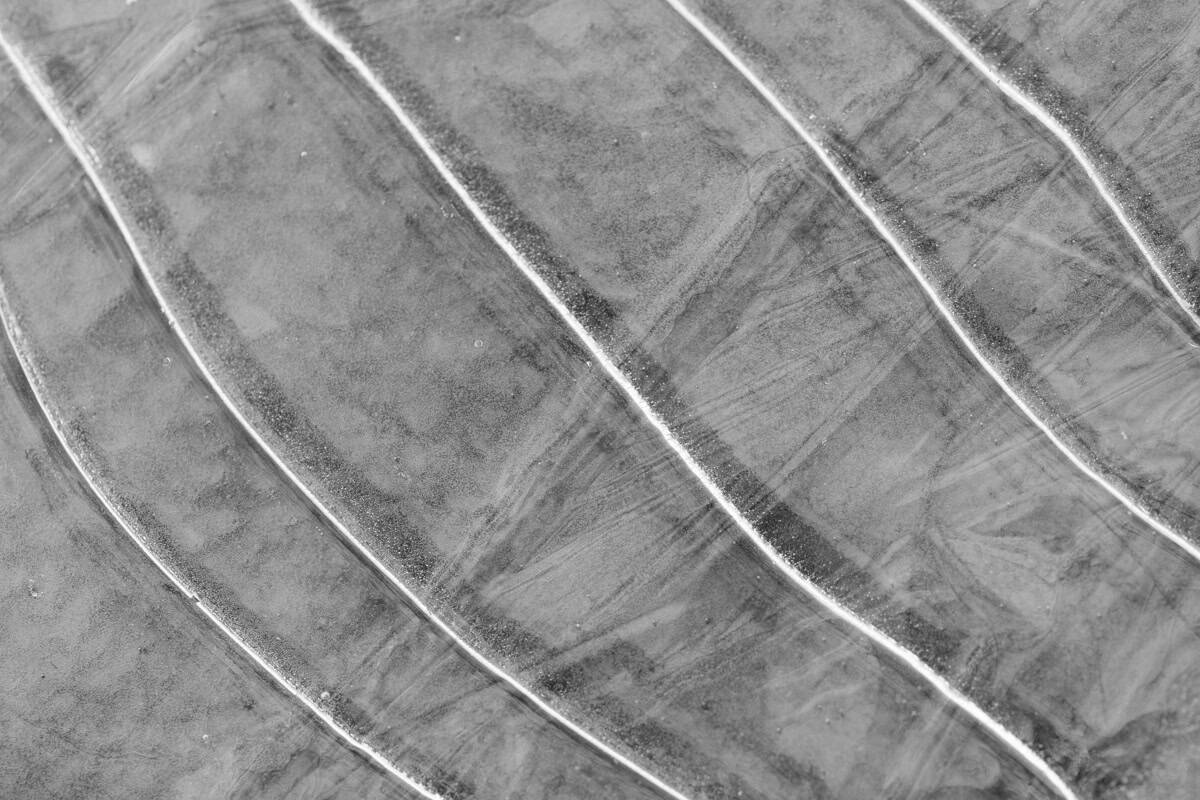
Image: Pamela Reynoso
About Post Author
