
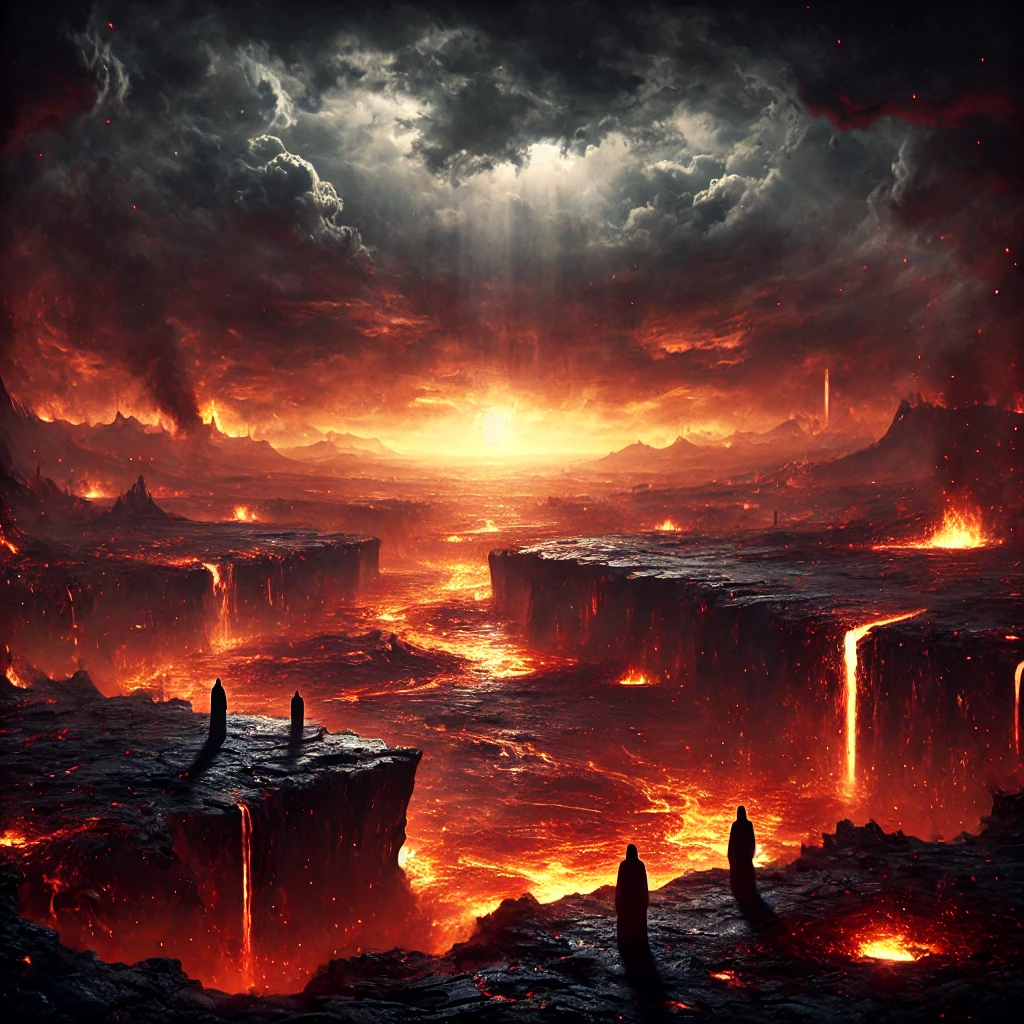
The concept of hell in the Bible is a sobering truth intricately woven through the Old and New Testaments. Described as a real place of outer darkness, eternal torment, and destruction, hell represents the culmination of the wages of sin and the rejection of the knowledge of the truth. The Bible vividly depicts God’s wrath against unrighteousness, from the fiery furnace to the gloomy darkness. It is a place where the worshipers of the beast, those marked with its mark, and others who defy the will of the Father face eternal separation from the presence of God.
Jesus, the Son of Man, emphasized hell’s reality, referencing the judgment of the great day and the lake of fire. For the wicked, it is a place of torment where a poor man like Lazarus is comforted at Abraham’s side, and the rich are left yearning for even a drop of water on the tip of his finger to quench their thirst. Yet, for those whose names are written in the Book of Life, the promise of the Kingdom of God, the new heavens, and the new earth remains.
The Word of God reveals hell’s depths and offers salvation, the gift of God—salvation through the name of the only Son of God.
Estimated reading time: 8 minutes
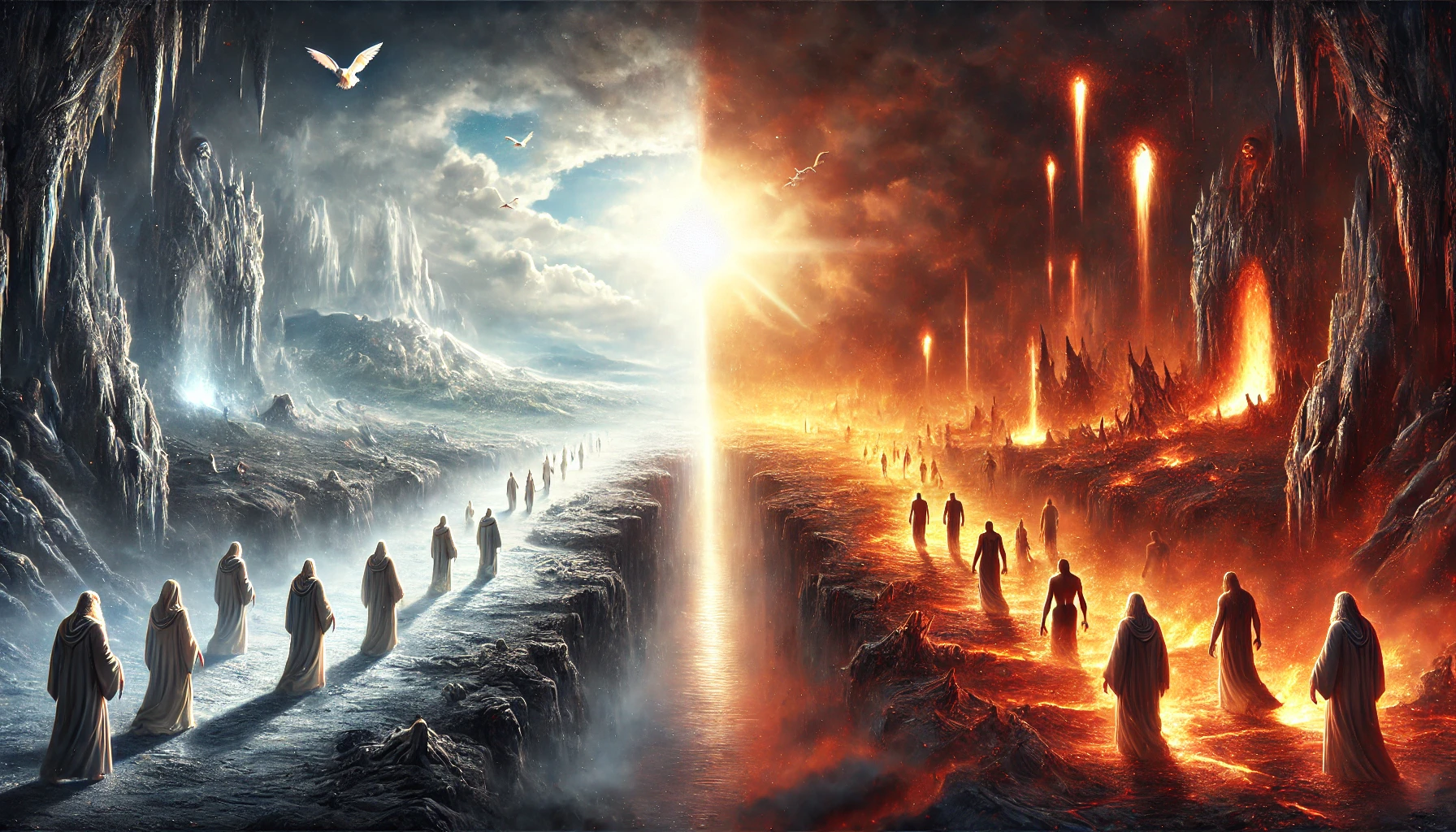
Revelation 21:8
“But for the cowardly, unbelieving, sinners, abominable, murderers, sexually immoral, sorcerers, idolaters, and all liars, their part is in the lake that burns with fire and sulfur, which is the second death.”
Reflection:
This verse vividly describes the lake of fire, emphasizing its role in God’s judgment. The second death symbolizes eternal separation from God. It reminds us of the importance of faith and rejecting sinful behaviors to avoid this eternal fate.
Matthew 10:28
“Don’t be afraid of those who kill the body but are not able to kill the soul. Rather, fear him who is able to destroy both soul and body in Gehenna.”
Reflection:
Here, Jesus contrasts physical threats with spiritual consequences. The warning about Gehenna urges believers to revere God, who holds authority over life and eternity.
Matthew 25:46
“These will go away into eternal punishment, but the righteous into eternal life.”
Reflection:
This verse highlights the finality of judgment: the wicked face eternal punishment, while the righteous receive eternal life. It reminds us to align with God’s Word to secure our place in His kingdom.
2 Thessalonians 1:9
“These will pay the penalty: eternal destruction from the face of the Lord and from the glory of his might.”
Reflection:
Separation from the presence of the Lord is the ultimate tragedy of hell. This verse warns us of the consequences of rejecting God’s truth and urges us to draw closer to Him in obedience and faith.

Psalms 9:17
“The wicked shall be turned back to Sheol, even all the nations that forget God.”
Reflection:
This psalm reminds us of God’s justice. Nations and individuals who forget God will face judgment, highlighting the universal need for reverence and obedience.
Matthew 13:50
“And will cast them into the furnace of fire. There will be the weeping and the gnashing of teeth.”
Reflection:
The imagery of the furnace of fire evokes the anguish of hell, emphasizing the need for repentance and faith in God to avoid eternal separation from Him.
Acts 2:27
“Because you will not leave my soul in Hades, neither will you allow your Holy One to see decay.”
Reflection:
This verse highlights the temporary nature of Hades for the righteous and the hope of resurrection through God’s power. It contrasts with the eternal nature of hell for the unrepentant.
Mark 9:43
“If your hand causes you to stumble, cut it off. It is better for you to enter into life maimed than to have your two hands and go into Gehenna, into the unquenchable fire.”
Reflection:
Jesus’ radical teaching underscores the seriousness of sin and the eternal consequences of unquenchable fire. It challenges us to remove ourselves from anything that leads us away from God.
Jude 1:7
Even as Sodom and Gomorrah, and the cities around them, having given themselves to sexual immorality and gone after strange flesh, are set forth as an example, suffering the punishment of eternal fire.
Reflection:
The story of Sodom and Gomorrah illustrates the consequences of rejecting God’s commands. The phrase eternal fire serves as a dire warning against living in disobedience.

Proverbs 15:24
“The path of life leads upward for the wise, to keep him from going downward to Sheol.”
Reflection:
This proverb contrasts the outcomes of wisdom and folly. Following God’s wisdom leads to eternal life while rejecting it leads to Sheol, a place of judgment.
Proverbs 23:14
“Punish him with the rod, and save his soul from Sheol.”
Reflection:
Discipline is a tool used to guide us away from sin and its consequences. It reflects the love of God, who corrects us to save us from eternal judgment.
Matthew 13:42
“And will cast them into the furnace of fire. There will be the weeping and the gnashing of teeth.”
Reflection:
Reiterating the imagery of the furnace of fire, Jesus warns of the anguish and regret that characterize hell. This verse calls us to heed His teachings and turn to Him.
Matthew 25:41
“Then he will say also to those on the left hand, ‘Depart from me, you cursed, into the eternal fire which is prepared for the devil and his angels.’”
Reflection:
This verse emphasizes the purpose of hell as a place of punishment for Satan and his followers. However, those who reject God also face this fate, reminding us to live in repentance and faith to avoid this eternal separation.
Revelation 19:20
“The beast was taken, and with him the false prophet who worked the signs in his sight, with which he deceived those who had received the mark of the beast and those who worshiped his image. These two were thrown alive into the lake of fire that burns with sulfur.”
Reflection:
This verse illustrates the ultimate defeat of evil powers. The lake of fire represents God’s final judgment, ensuring that sin and deception are forever removed from His kingdom.

Proverbs 15:11
“Sheol and Abaddon are before Yahweh—how much more then the hearts of the children of men!”
Reflection:
This verse reflects God’s omniscience and authority over Sheol (the grave) and Abaddon (destruction). It reminds us that nothing is hidden from Him, and He knows the condition of every heart.
Matthew 16:19
“I will give to you the keys of the Kingdom of Heaven, and whatever you bind on earth will have been bound in heaven, and whatever you release on earth will have been released in heaven.”
Reflection:
While this verse focuses on authority in the Kingdom of Heaven, it indirectly reminds us of the consequences of sin and the need for spiritual leadership to guide others away from the path to hell.
2 Peter 2:4
“For if God didn’t spare angels when they sinned, but cast them down to Tartarus, and committed them to pits of darkness, to be reserved for judgment.”
Reflection:
This verse highlights God’s justice, showing that even angels are not exempt from His judgment. The pits of darkness warn of the consequences of sin for all creation.

Revelation 20:13–14
“The sea gave up the dead who were in it. Death and Hades gave up the dead who were in them. They were judged, each one according to his deeds. Death and Hades were thrown into the lake of fire. This is the second death, the lake of fire.”
Reflection:
This passage reveals the final judgment, where all are held accountable for their deeds. The second death represents eternal separation from God in the lake of fire, emphasizing the need for salvation through Christ.
Matthew 11:23
“And you, Capernaum, will you be exalted to heaven? You will be brought down to Hades. For if the mighty works done in you had been done in Sodom, it would have remained until this day.”
Reflection:
Jesus warns Capernaum, emphasizing that unrepentance in the face of divine miracles leads to judgment. The reference to being “brought down to Hades” highlights the consequence of ignoring God’s call to repentance. This verse serves as a lesson to respond to God’s works with humility and transformation, knowing that spiritual pride or indifference can lead to eternal separation from God.
Ezekiel 18:20
“The soul who sins, he shall die. The son shall not bear the iniquity of the father, neither shall the father bear the iniquity of the son. The righteousness of the righteous shall be on him, and the wickedness of the wicked shall be on him.”
Reflection:
This verse underscores individual accountability before God. Each person is responsible for their actions, and rejecting God leads to spiritual death and eternal separation.
Revelation 20:10
“The devil who deceived them was thrown into the lake of fire and sulfur, where the beast and the false prophet are also. They will be tormented day and night forever and ever.”
Reflection:
This verse depicts the eternal punishment of Satan and his followers in the lake of fire. It serves as a reminder of God’s ultimate triumph over evil and the reality of eternal judgment.
Matthew 5:22
“But I tell you that everyone who is angry with his brother without a cause will be in danger of the judgment. Whoever says to his brother, ‘Raca!’ will be in danger of the council. Whoever says, ‘You fool!’ will be in danger of the fire of Gehenna.”
Reflection:
Jesus warns about the dangers of unchecked anger, which can lead to sin and eternal consequences. The reference to Gehenna highlights the seriousness of living in harmony and righteousness.
Revelation 14:11
“The smoke of their torment goes up forever and ever. They have no rest day and night, those who worship the beast and his image, and whoever receives the mark of his name.”
Reflection:
This verse describes the eternal suffering of those who align with evil. The imagery of the smoke of their torment reminds us of the permanence of hell and the importance of rejecting sin.
Matthew 23:33
“You serpents, you offspring of vipers, how will you escape the judgment of Gehenna?”
Reflection:
Jesus addresses the Pharisees with strong language, warning them of the judgment awaiting unrepentant hearts. The judgment of Gehenna signifies eternal consequences for hypocrisy and pride.
Luke 16:23
“In Hades, he lifted up his eyes, being in torment, and saw Abraham far off, and Lazarus at his bosom.”
Reflection:
This verse provides a glimpse of the afterlife, showing the torment of the unrighteous in Hades. It contrasts with the comfort of the righteous, emphasizing the importance of living for God.
Matthew 5:29
“If your right eye causes you to stumble, pluck it out and throw it away from you. For it is more profitable for you that one of your members should perish, than for your whole body to be cast into Gehenna.”
Reflection:
Jesus uses hyperbole to stress the seriousness of avoiding sin. The warning about Gehenna underscores the eternal consequences of allowing sin to remain unchecked.
Matthew 18:9
“If your eye causes you to stumble, pluck it out and throw it away. It is better for you to enter into life with one eye, rather than having two eyes to be cast into the Gehenna of fire.”
Reflection:
This verse reinforces the importance of spiritual discipline. The Gehenna of fire represents eternal punishment, urging us to remove anything that hinders our relationship with God.
Mark 9:48
“‘Where their worm doesn’t die, and the fire is not quenched.’”
Reflection:
The imagery of an undying worm and unquenchable fire paints a graphic picture of the torment in hell. It serves as a warning to prioritize spiritual matters and pursue righteousness.
Matthew 13:49–50
“So will it be in the end of the world. The angels will come and separate the wicked from among the righteous, and will cast them into the furnace of fire. There will be the weeping and the gnashing of teeth.”
Reflection:
This passage describes the final judgment, during which angels separate the righteous from the wicked. The furnace of fire symbolizes the eternal fate of those who reject God’s truth while the righteous enter His kingdom.
Matthew 8:12
“But the sons of the kingdom will be thrown out into the outer darkness. There will be weeping and gnashing of teeth.”
Reflection:
This verse speaks about those who assumed they belonged to God’s kingdom yet failed to follow Him truly. The “outer darkness” represents separation from God, marked by anguish. It is a call for sincere faith, urging individuals to examine their hearts and align with God’s will, ensuring they are not merely nominal believers but fully committed to Christ.
Luke 16:24
“And he called out, ‘Father Abraham, have mercy on me, and send Lazarus to dip the end of his finger in water and cool my tongue, for I am in anguish in this flame.’”
Reflection:
Luke 16:24 gives a glimpse of the torment experienced by those in hell. The rich man’s plea for relief emphasizes the irreversible and agonizing nature of hell’s punishment. This story serves as a warning and a call to repentance, stressing the urgency of making the right spiritual choices before it is too late.

The Bible’s depiction of hell is clear and sobering, emphasizing God’s justice and the consequences of sin. These verses remind us of the reality of eternal separation and the urgency of repentance. Through faith in Christ Jesus, we can escape the second death and embrace everlasting life in His presence.
Let these scriptures inspire us to live righteously and share the gospel, offering hope to a world needing God’s saving grace.
(Scripture verses from the WEB version of the Bible.)
About Post Author

Hello at Faith on View, thanks for your posting of these verses about hell and your article. I wanted to offer some evidence in favor of an opposing view though. I see that you are supporting the concept of hell which involves endless conscious torment for eternity of the wicked. All of verses which you have shown when taken in context with proper translation do not support that view though. Just to give one example we could look at Revelation 14:11. As you probably know, Revelation 14:11 is one of the pivotal verses on the topic and is also one of the most debated over. As you may know, the language in Revelation 14:11 is shared with Isaiah 34, “smoke goes up forever”. If we look in the Dead Sea scrolls, the language of Isaiah 34 is a little bit different and may be revealing:
[Isaiah 34:6-7, 9-10 DSSB Dead Sea Scrolls Bible] 6 The Lord has a sword filled with blood, gorged with fat, with the blood of lambs and goats, with the fat of rams’ kidneys. Indeed the Lord has a sacrifice in Bozrah, and a great slaughter in the land of Edom. 7 The wild oxen will fall with them and the young bulls with the mighty steers. Their land will be drunk with blood and their soil saturated with fat. …… 9 It streams will be turned into pitch, and its soil into sulfur, and its land will become pitch. 10 It will burn night and day and will never be extinguished. Its smoke will go up from generation to generation, and it will lie waste forever and ever. No one will pass through it.
Of course this Isaiah 34 passage above reads this way in an English translation of the Hebrew Masoretic text below (aligning with the language, “Its smoke will go up forever” which John re-used in Revelation 14:11):
[Isaiah 34:6-7, 9-10 NASB20] 6 The sword of the LORD is filled with blood, It drips with fat, with the blood of lambs and goats, With the fat of the kidneys of rams. For the LORD has a sacrifice in Bozrah, And a great slaughter in the land of Edom. 7 Wild oxen will also fall with them And young bulls with strong ones; So their land will be soaked with blood, And their dust become greasy with fat. … 9 Its streams will be turned into pitch, And its loose earth into brimstone, And its land will become burning pitch. 10 It will not be extinguished night or day; Its smoke will go up forever. From generation to generation it will be desolate; None will pass through it forever and ever.
As you may recognize, the language in verse 10, in either the Dead Sea scrolls or the Masoretic text above is very reminiscent of the virtually never ending smoke of the continual morning and evening regular sacrifice in the Old Testament sacrificial system in the Pentateuch. The abundant sacrifice language preceding verse 10 above in Isaiah 34 may also give us more reason to understand that verse 10 is also using the language of sacrifice. I have done several years of deep research on this topic and found that there is an abundance of evidence in numerous places in the Bible to demonstrate what I’m proposing here about verse 10 being the language of the continual morning and evening regular sacrifice. If this is correct, the language that John is using in Revelation 14:11 hearkens back to a sacrificial symbolism which communicates complete and utter destruction to the point of ashes and not endless torment. If correct, this would harmonize Revelation 14:11 with the quotation of Jesus that you show from Matthew 10:28:
[Matthew 10:28 NASB20] 28 “And do not be afraid of those who kill the body but are unable to kill the soul; but rather fear Him who is able to destroy both soul and body in hell.
If you or anyone here visiting your page would be interested to see more details on these connections between the continual morning and evening regular sacrifice of the Pentateuch and Revelation 14:11 please see “Hell Is Made Holy” which you can find online for no green just using my name David Aaron Beaty and “Hell Is Made Holy”. Thank you again for your article and God bless you, your ministry, and your readers.
David, thank you for your perspective. You have good points, many with which I agree. Honestly, these verse pieces are put together by our team and lack the type of theological rigor you are rightly desiring. I will have to revisit this article personally.
We do have a project that I think you will find interesting, simply called the Questions Project.
https://www.faithonview.com/questions/
This project seeks to be much more sophisticated, giving diverse perspectives on a variety of issues. These are not definitive. In fact, we do not call the articles “answers,” they are “responses.” The hope is to provide responses that offer a variety of perspectives on issues from diverse traditions. In fact, as time allows, we review the comments and add to them if we have neglected meaningful perspectives.
Here is the Response on the question, “What is Hell?”
https://www.faithonview.com/what-is-hell/
I would encourage you to leave feedback there.
In fact, we are always looking for people with diverse perspectives who are interested in joining the Questions Editorial Team.
https://www.faithonview.com/about/opportunities/