For good or ill—and I think it was almost exclusively good—I grew up in a small country church that was disconnected from the broader Christian culture. I did not grow up listening to Christian music. I remember the first time I heard the Christian band Stryper. It was in our gravel church parking lot when a youth group from a town thirty minutes away was visiting our church. I learned more about Contemporary Christian Music (CCM) in high school. We got a pastor from Sacramento, the “big” city near us, whose children were musical and interested in CCM. But it never drew me much.
An Introduction to CCM
There was a bit of a change in 1996 when I heard D.C. Talk’s “Jesus Freak” on the local rock radio station. After that, I became interested in a few groups and listened to a decent amount of CCM over the next decade. But there was little that engaged me and fed me. Over time, I listened less and less. I listen to very little now, almost exclusively songs that I liked 20-30 years ago.
A few years back, John Joseph Thompson and I were both panelists on a Howard Finster panel at a local museum. John developed some renown in the Christian music world through his True Tunes podcast. I had never heard of him or the podcast. But we have a mutual friend, Steve Scott, who lives in both the Christian art and Christian music worlds. That night, introduced me to a world of Christian music I never knew existed.
Hayley Williams and a Haunting Lament
John recently posted on social media about Hayley Williams’ song True Believer in a positive way. I knew a little about this song because my wife had shared it with me recently. While I liked it, I was busy when I heard it, and it slipped from my consciousness. I have now listened to it quite a bit. Honestly, it is a mesmerizing song. For me, it catches the spirit of the American church and, I’ll say it, Southern culture more than any song I have ever heard.
The response to John’s post was mixed but mostly positive. That makes sense; he is a music guy, and many of his connections are likely to share his affinities. There were negative comments from someone who objected to John including “worship” in his labelling of the song. Another person simply said, “Good lord no.”
Confronting Criticism and Cliché
The comment that caught my attention, though, was “Same old cynicism that’s gotten kind of tired now. I get it, I’ve lived it, but it just feels cliche to me now. Pass. No thanks.” For me, this song captures this particular moment in Church and American history with profound, haunting force. It is far from cliché. There is truth to the idea that Christian hypocrisy has been the cudgel of cynics for years. But this song is not a cynical dismissal of the faith or the Church; it is a lament from a “true believer.” Scripture is full of lament with calls from God’s prophets against the hypocrisy of God’s people. Are we to so easily dismiss those numerous passages as cliché? Can we simply say, as this person did in a later comment, “I’m over it.”?
Another person wrote the comment, “Not after the foul language I’ve heard from her of late.” I wonder how this person reacts when they read God saying to Ezekiel,
“Yet she increased her prostitutions, remembering the days of her youth, when she prostituted herself in the land of Egypt and lusted after her paramours there, whose members were like those of donkeys and whose emission was like that of stallions. Thus you longed for the lewdness of your youth, when the Egyptians fondled your bosom and caressed your young breasts.” (Ezekiel 23:19-21)
Do they dismiss God’s words—ironically about the hypocrisy of his people—because they don’t like God’s foul language about giant penises, massive ejaculations, and fondling young breasts?
Today’s CCM and the Disconnect from Scripture
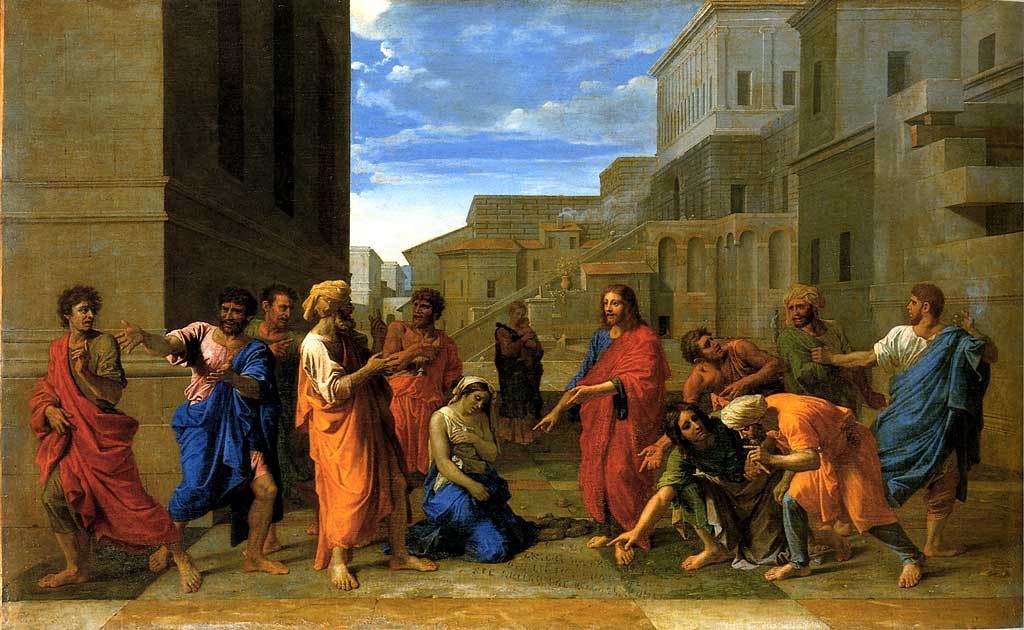
Unrelated to any of this, I recently mentioned to a student who has the reputation of “listening to Jesus music” that I wasn’t familiar with good new Christian music. She sent me several artists that she likes. I’ve been listening to them… but have to admit I’m not a fan. They remind me of why I listen to very little CCM these days, which seems completely disconnected from scripture and life to me. The thing that I love about scripture is that it is true and real. It doesn’t sugarcoat our reality. The world isn’t all roses and cotton candy. Sometimes we long for the lewdness of our youth. Sometimes we turn our backs on the injured man in the ditch. Sometimes we grab rocks to stone a person we find objectionable.
Most Contemporary Christian Music, and honestly, a lot of church worship services I’ve been to, feel more like the hype of multi-level marketing conferences than the Bible, which stares into our brokenness and declares that God loves us anyway.
American Christianity is a lot like multi-level marketing. It shouldn’t surprise us that there is a considerable overlap between the two. Both are selling a dream. A better life. MLMs sell financial abundance, often to those who have little hope of achieving it. The church sells emotional wholeness to people who feel broken and don’t know how to fix it.
Selling the Dream vs. Living the Truth
Too often, we sell a Christianity that “works” in an earthly sense rather than a Christianity that is True in a transcendent sense. We sell life, liberty, and happiness to broken, unjust people. We don’t bow our heads in repentance of our greed, injustice, bigotry, and hatred. We bow our heads to claim a promise of spiritual and, sadly, sometimes financial wholeness. Rather than submitting in humility to our servanthood to Christ, we claim liberty and the promise that God wants us to be happy, that God blesses His people.
Christianity does not work, at least not in the way we are selling it. God does not promise us the American dream. He promises persecution to those who follow Him. He does not promise us power, and certainly not in this life.
The False Gospel of Power and Persecution
So, what happens to a Church that is devoted to a God who, they believe, will make their lives legendary? (Sorry, I’ve been watching How I Met Your Mother).
They become convinced that the fullness of God’s promise that we will have trouble in this world (John 16:33) is because Christians, who are the majority and on average wealthier than the rest of the nation, are being persecuted.
They become convinced that Jesus, who explicitly claims that His Kingdom is not of this world, wants to use it to establish a Christian nation.
We become convinced that we are too weak. Turning the other cheek becomes weakness; empathy becomes weakness; love becomes weakness. In the end, we reject the Way of Jesus.
We become convinced that the Jesus who laid His life down for our good, the act carried out by a corrupt state, and who declared love the pinnacle of His teaching, wants us to embrace an authoritarian state and cheer when the head of state declares that he hates his enemies.
We become convinced that Holy Scriptures, which declare that pure and undefiled religion is “to care for orphans and widows in their distress,” lead us to establish a government that gives no thought to the least of these.
We become convinced that a God who declared that He desires mercy, not sacrifice, really meant that He wants us to sacrifice the weak, the immigrant, the marginalized, at the altar of our power.
We become convinced that the God who inspired the words “If any think they are religious and do not bridle their tongues but deceive their hearts, their religion is worthless” wants us to follow the lead of loud, bombastic, cruel influencers and Christian politicians who promote a faith unrecognizable to the God of Scripture who wants us to “do justice, love kindness, and walk humbly.”
Struggling with the Church, Clinging to the Way
I struggle to relate to a church that believes lament is cliché and that “Jesus Music” should be only happy platitudes rather than reflect the depth of human experience; a church that believes we are known by our religious proclamations and coercive laws rather than by our love. I struggle because that sounds nothing like the faith in God proclaimed in scripture.
Some in the Church look at me and declare I can’t be a Christian because my priorities do not align with their political ambitions. To them, if I were a Christian, I would desire the establishment of Christianity in our nation. I don’t reject the label Christian, nor have I left the Church as some I know have. But I remember that the institutional Church is not the same as the Ecclesia, the spiritual Church. I remember that Christian was the name given to those who follow the Way. Any Church or conception of Christianity that is not consistent with the Way of Christ is devoid of Christ’s Truth and Life.
When we follow the Way and the Truth of Christ, we find Life in Him. We are known not by our power, our political influence, or our adherence to the tenets of a culture war, but by our love for our friends, neighbors, and enemies as we are taught in Scripture.
Image: Pamela Reynoso
About Post Author