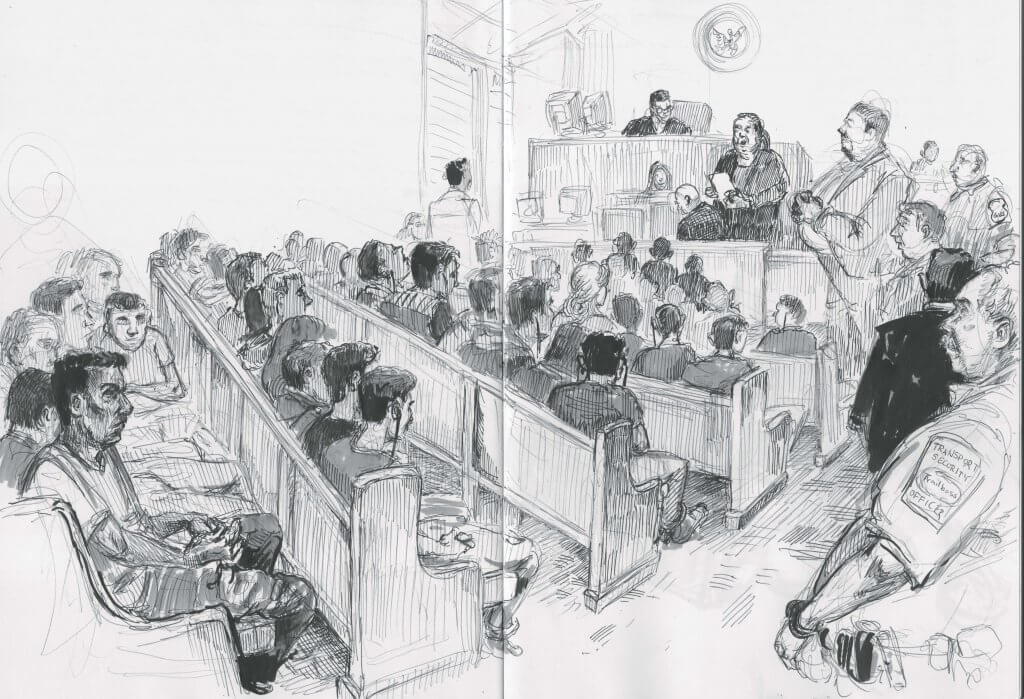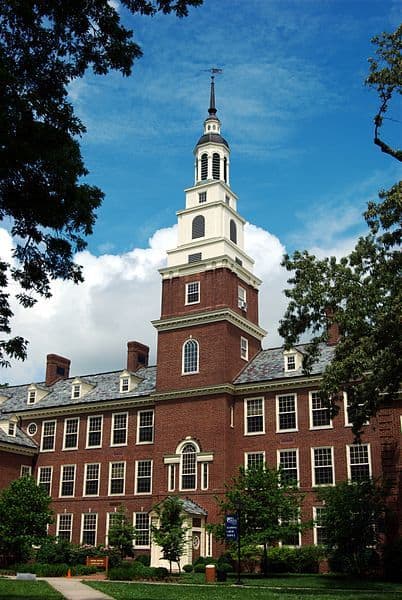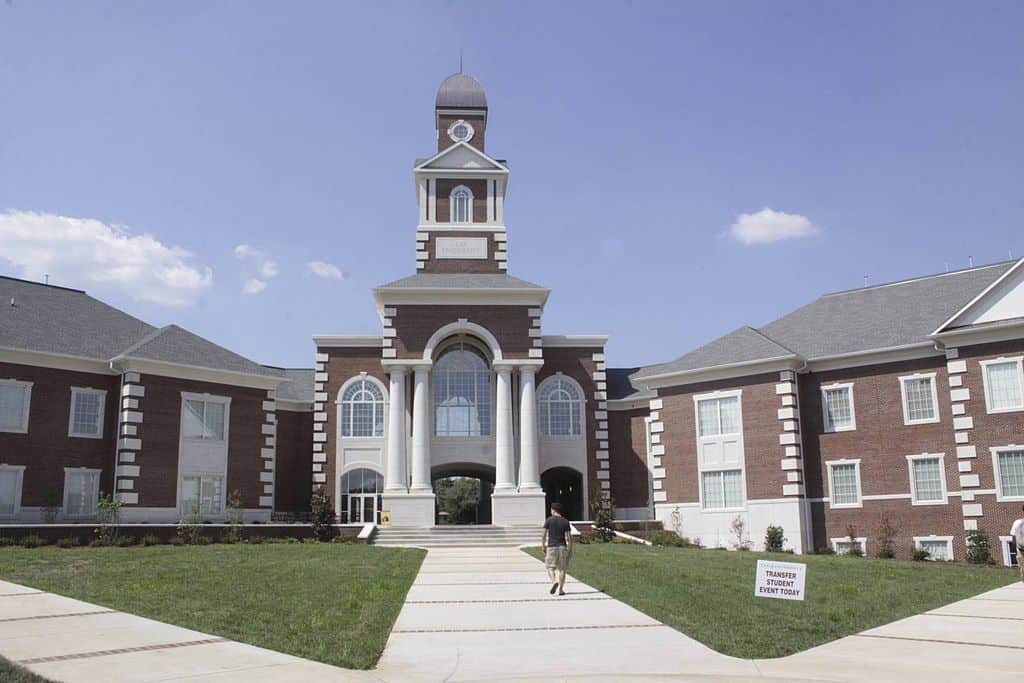
I’ve taught at three different Christian colleges, and I love it.
Teaching Art and Faith at Christian Colleges
Art and faith are often seen as at odds. As an artist deeply immersed in my faith, it is an honor to teach students who are just learning to navigate the relationship between their art and faith. It is a wonderful profession to not only help students improve their technical skills but to encourage them to explore their spirituality through their art while avoiding the traps of cliché art and spirituality.
The Tension Christian Artists Must Navigate
Of all the classes I’ve taught at Christian colleges (over 30 courses over the years), my favorite was a course titled Art & Christian Faith. This course evolved over the six years I taught it. But central to every iteration was an exploration of the relationship between art and faith and what that meant for the students. It was an incredibly rewarding class.
It is also a good example of why I cannot teach at a Christian college. Maybe the central theme of the class was tension. Christian artists live both in a secular art world and a community of faith. There is a tension there. Humans are both broken and made in the image of God. There is a tension there. It seemed that we repeatedly discussed the importance of living in the tensions of life, faith, and art. It was an honest class where life was not reduced to a two-dimensional caricature. The complexity of our experiences as Christian artists was honestly discussed.
I’ve had multiple students reach out to me several years after graduation to tell me how important that class was to them personally and how they still think about the conversations we had in it. I think this is the impact every professor hopes their classes have on their students.
A Classroom Conversation That Changed a Student’s Faith
This reminds me of a story that begins in a freshman 2-D Design class and culminates in the Art & Christian Faith class.
Often, when we have conversations with students, we don’t know what is going on in their lives. Several years ago, I had a student who really wanted to talk when he came to my 2-D Design class. It was a workday, so we were able to talk while the students worked on their projects. He started a wide-ranging conversation that touched on some controversial topics. Honestly, it was a good conversation. I was careful to make sure what I said complied with university policies, but I also tried to be honest and not shy away from nuance.
That summer, a student in that class and her mother sent letters to the university president complaining about me. Neither the student nor the mother ever spoke to me, my chair, or my dean. They sent letters directly to the president. I had to meet with the chair, but when I explained the situation, there wasn’t an issue.
Over the next few years, I got to know the student who started the conversation that day. He was the kind of student everyone loved. I even remember hearing a random conversation in the dining hall between people I did not know about how great a guy he was.
Why Students Need Space to Question
In his senior year, this student took Art & Christian Faith, which was one of our capstone classes. During a class discussion, he brought up the conversation he had initiated in my 2-D Design class his freshman year. What I didn’t know previously was the struggles he was dealing with personally as a freshman in college. One of the major challenges he dealt with that year was his mother coming out as gay. Apparently, that year, he had conversations with several faculty and staff members about hard topics. I’m assuming that he never came out and directly told them what he was dealing with, just as he hadn’t with me. In the process, he had received rather two-dimensional responses that didn’t acknowledge the real-life struggles of these situations.
He told the class and me that the conversation we had that day was the first time someone had responded in a way that gave room for the struggle. It was the first time he had been encouraged to struggle with a variety of difficult issues in a way that made his faith his own. The humbling part is that he claimed that without that conversation, he likely would have left the Church and the faith.
That conversation in his freshman year was wide-ranging. I didn’t know what he was struggling with. We, the entire class, talked about a lot of topics. But clearly, there was something in that conversation that was deeply needed. He needed to be allowed to live in the tension.
The Risk of Honest Faith in Evangelical Institutions
When I arrived at this university, I had hoped to start a Bible study with students. My hope was for it to be the type of Bible study where we could navigate difficult issues. I seem to have a knack for creating a safe space where students can struggle in a faith-positive environment, and I wanted to use that gift to help students.
I’ve never started that Bible study. Honestly, my reasoning stems from concerns related to the letters from that student and her mother to the university president. If I were to authentically engage in a Bible study like the one I am imagining, I would have to be honest and open. I would have to share my struggles and doubts. I would have to admit to theological questions and concerns. However, often when one teaches at an evangelical institution, there are doctrines and cultures we are not allowed to question. This gets especially challenging when we work at an institution that belongs to a different theological tradition than our own. There is a fear that, in my pursuit of authentic faith, I could inadvertently cross an invisible line I don’t fully understand.
I had five children still at home, two of them are disabled. I couldn’t afford to lose my job. So, I’ve never started that Bible study.
When Fear Silences Needed Conversations
This hit me hard when I found out the previously unknown impact of my words from several years before. Other students need to hear what this student heard. Other young people need to be allowed to question and make their parents’ faith their own. Without that, there are certainly those who will walk away from a faith they were never truly allowed to explore.
Questioning has been an important part of my spiritual journey. Exploring questions has allowed my faith to grow. But in Christian institutions, questions are risky. There is a frustration in being restrained by those who wish to guard faith from a discipline that actively helps me build my faith.
I thank God for the providential conversation that, unbeknownst to me, was so impactful for my student. But I also grieve those conversations that never happened because of a spirit of fear.
When Christian Colleges Value Obedience Over Faithfulness
The story above gets at the crux of why I cannot teach at a Christian college. Both faith and education can be messy. Students and people pursuing faith need to be able to pursue uncomfortable questions. They have to be able to ask, “Is that true?” both in relation to faith and their academic discipline. For me, guiding students through this process is incredibly meaningful.
This process brings to mind points I have heard made by two very different Christian academics.
Peter Enns is a Biblical scholar at Eastern University, a Christian institution in Pennsylvania. I remember reading something he wrote well over a decade ago in which he made the point that evangelicals value education so long as you arrive at their predetermined conclusions.
Jack Crabtree is a philosopher and one of the founding faculty members of Gutenberg College in Oregon. Gutenberg is a tiny Great Books college that I have been a fan of for years. In a video, he once said that the goal of most Christian colleges is to acculturate students into Christian culture.
Over the years, I have found both Enns’ and Crabtree’s insights to be true. I’ve articulated it in conversations by saying that Christian colleges, at least the ones I’ve worked at, are more concerned with obedience than faithfulness. I don’t mean this in a malicious way. These institutions honestly conflate obedience with faith.
Hearing God Is More Than Blind Obedience
But obedience is not faith. Christ twice quoted Hosea 6:6, “I desire mercy, not sacrifice.” Once following it up by saying that He came to call the sinners, not the righteous. (Mat. 9:13). It isn’t about those who obey all the rules. Jesus was constantly called out by the Pharisees because He and his disciples did not obey all the rules. The NRSVue translation of Hosea 6:6 is clarifying. “For I desire steadfast love and not sacrifice, the knowledge of God rather than burnt offerings.”
Some may point to 1 Samuel 5:22 in rebuttal. “To obey is better than sacrifice, and to heed is better than the fat of rams.” (NIV) But the word translated ‘obey’ and ‘heed’ in this verse actually means ‘to hear’ or, maybe more accurately, as the Strongs Concordance says, “to hear intelligently.” There is an assumption by the translators that fully hearing God leads to obedience. That is true. But the focus is not blind obedience but hearing and understanding God.
Maybe that is a good way to explain the key reason I no longer feel I can teach at a Christian college. Too often, even unintentionally, the goal of Christian colleges is to acculturate students to Christian culture, teaching them to obey the evangelical conclusions about who God is and what following Him looks like. My goal is to help students learn to intelligently hear God so that they can love steadfastly, fortified by their knowledge of God.
Why Complexity Matters in Christian Higher Education
The mission of Faith on View is to “help Christians live and love in the tension of faith.” That is a mission I believe in.
The last Christian university I taught at claimed in its mission statement to “prepare [students] for responsible Christian living in a complex world.” The other school I taught at all said something similar. It sounds good. But the subtle difference in this statement is that the world is complex, not Christian living. Responsible Christian living often gets reduced to responsibly following the simple rules in the face of the complex challenges presented by the world. I would argue that faith is complex. Scripture is complex. Loving well is complex. We need to embrace and navigate the tensions inherent in that complexity rather than seeking to fight complexity with simplicity.
One of my favorite quotes is from the artist Constatine Brancusi, “Simplicity is complexity resolved.” True simplicity resolves the complexity, often by accepting and not being distracted by the tensions. Many Christians seem to believe that simplicity is complexity ignored. Ignoring complexity dismisses and characterizes it. It is a facade that fails to transcend.
The Promise and Pain of Christian Colleges
I pray that my experience is not indicative of all Christian colleges. I have enough experience to see that it is indicative of most. Though I recently had a conversation with a retired professor who spent his career at Messiah College. He left me hopeful.
I believe in the idea of Christian higher education. I believe in the good it can do for students and the fulfillment it can offer faculty and staff. But I have also seen the harm that it can do to students when the ideals of faith turn toward coercion. I have seen the fate of faculty and staff who value faithfulness over obedience.
Finding Freedom Outside Confessional Institutions
For now, I’ve found a home at a church-related school that is not confessional. I would not in any meaningful way describe as a Christian college. But it is a place that allows me to pursue God both in my life and my scholarship. I am still learning how to be a resource to my Christian students in this context. I deeply miss teaching my Art & Christian Faith class. But I have no fear here that pursuing God within the bounds of historic Christianity will push against the cultural boundaries of my institution.
About Post Author