I still remember America’s 200th birthday, or at least I remember it the way a five-year-old remembers things: not in policy or politics, not in historical nuance, but in colors, sounds, and feelings. It was the summer of 1976, and I was growing up in a little town in northeast Arkansas where red, white, and blue seemed to show up everywhere. There were flags, parades, fireworks, patriotic songs, television specials, and that strange Bicentennial magic that made even small-town America feel as if it were standing in the middle of history.
Back then, America felt simple to me because childhood has a way of making everything feel simple. America was the good guy. America was freedom. America was the nation that defeated tyranny, landed on the moon, and promised liberty and justice for all. Like most children, I inherited the story before I learned the history, and I accepted the myth before I understood the cost.
Now, fifty years later, as America turns 250, I find myself standing in a very different emotional place. It isn’t that I love this country less. In some ways, I may love it more honestly now than I did then. But the love I have now is not the untested patriotism of childhood. It is not the paper-flag patriotism of school programs and fireworks shows. It is a love that has been bruised by history, challenged by reality, and reshaped by listening to the stories of people whose America was never as innocent as mine seemed to be in 1976.
When Patriotism Meets History
Over the years, I have spent much of my life studying American history and listening to Americans tell their stories in their own words. I have heard veterans remember war, politicians remember power, activists remember struggle, immigrants remember arrival, educators remember change, and ordinary people remember the complicated business of trying to build a life in this country. What I have learned is that America is far more beautiful than I imagined as a child, but it is also far more tragic. Both things are true, and any honest reflection on this nation must make room for both.
This is a country capable of extraordinary generosity and breathtaking cruelty. It produced the Declaration of Independence while millions remained enslaved. It gave us the Bill of Rights while denying those rights to entire communities. It welcomed immigrants while fearing the stranger. It preached freedom while practicing exclusion. It inspired the world with its ideals while repeatedly falling short of them at home.
For many years, I thought patriotism required defending America. Now I think patriotism requires telling the truth about America. That does not mean despising the country. It means loving it like an adult instead of worshiping it like an idol. It means refusing the cheap comfort of nostalgia when nostalgia becomes a hiding place from history. It means admitting that the flag has meant freedom to some and fear to others, opportunity to some and exclusion to others, home to some and heartbreak to others.
That tension makes this anniversary difficult for me. I do not feel the uncomplicated pride I felt in 1976, and I would be lying if I said I did. There are days when the divisions seem too deep, the rhetoric too poisonous, and our politics too cynical. There are moments when nationalism masquerades as Christianity, when power matters more than principle, when cruelty gets baptized as strength, and when neighbors increasingly see one another as enemies rather than fellow travelers trying to make it home.
Jeremiah’s Letter to Exiles
But I cannot bring myself to despair either, because Scripture has taught me another way to live in a place that is both beloved and broken. In Jeremiah 29, God’s people are living in Babylon. They are not where they want to be. They have lost the world they knew. Their institutions have collapsed, their future feels uncertain, and false prophets are promising them a quick escape from the hard reality of exile. But God gives them a surprising command. He tells them to build houses, plant gardens, marry, raise families, and seek the welfare of the city where they have been carried into exile.
That command has stayed with me because God did not tell the exiles to pretend Babylon was holy. He did not ask them to wave Babylonian flags and call the empire righteous. But neither did God permit them to sit in bitterness and watch the city burn. They were called to live faithfully in an imperfect place, to work for the flourishing of a city they could not fully trust, and to pray for the peace of a nation that was not the Kingdom of God.
Maybe that is where many of us find ourselves now. America is not ancient Israel, and it is not God’s chosen nation. It is not the Kingdom of God wrapped in red, white, and blue. It is simply the place where many of us have been planted, and that changes the question. Instead of asking whether America deserves my uncritical pride, I find myself asking whether my neighbors deserve my faithful love. Jeremiah’s command was never really about romanticizing empire. It was about seeking the welfare of people.
Seeking the Welfare of Our Nation
That kind of patriotism feels healthier to me now. It allows gratitude without denial, critique without contempt, and hope without illusion. I can be thankful for the freedoms that allowed a poor kid from rural Arkansas to earn an education, write books, speak openly about faith and justice, criticize his own government, and spend his days preserving the stories of ordinary Americans. Those are not small things. They are remarkable gifts, and I do not want cynicism to make me forget them.
But those freedoms have never been equally shared, and each generation must widen liberty’s circle. Perhaps America’s truest story is not that we have arrived, but that its best people keep pulling the nation closer to the promises it made before it had the courage to live them fully.
The older I get, the less interested I become in defending myths. My faith has taught me that confession is healthier than denial, that healing begins when wounds are acknowledged, and that repentance is not weakness but the beginning of transformation. Nations, like people, cannot become better versions of themselves until they are honest about who they have been. That does not diminish America. It dignifies it because pretending is cheap, but truth-telling requires courage.
Hope Beyond Nationalism
So as America turns 250, I find myself neither waving the flag with childish innocence nor burning it down in bitterness. I am somewhere in between, which may be the most honest place to stand. I am thankful, but not naive. Hopeful, but not blind. Troubled, but not defeated. I still believe there is something worth saving here, not because America is perfect, but because people are worth loving, communities are worth building, and justice is worth pursuing even when the road is long.
As Christians, our ultimate citizenship belongs elsewhere. Every flag eventually fades, every empire eventually falls, and every political movement disappoints. But while we are here, we are called to seek the welfare of the place where we live: to feed the hungry, welcome the stranger, defend the vulnerable, pursue justice, love our enemies, and tell the truth. Those are not merely American values. They are Kingdom values, and maybe those are exactly the values America needs as it begins its next 250 years.
So this Independence Day, I probably will not feel what I felt as a five-year-old watching fireworks in 1976, but maybe that is alright. Childhood wonder is a gift, but adult honesty is a calling. I can be grateful for what America has made possible in my life while grieving what it has denied to others. I can honor the sacrifices of those who expanded liberty while refusing to confuse patriotism with propaganda. I can love my country best by refusing to lie about it.
Happy 250th birthday, America. I choose to believe our best days are still ahead. May your next chapter bring you closer to the nation you have always claimed to be, and may we have the courage to seek your welfare without surrendering our souls.
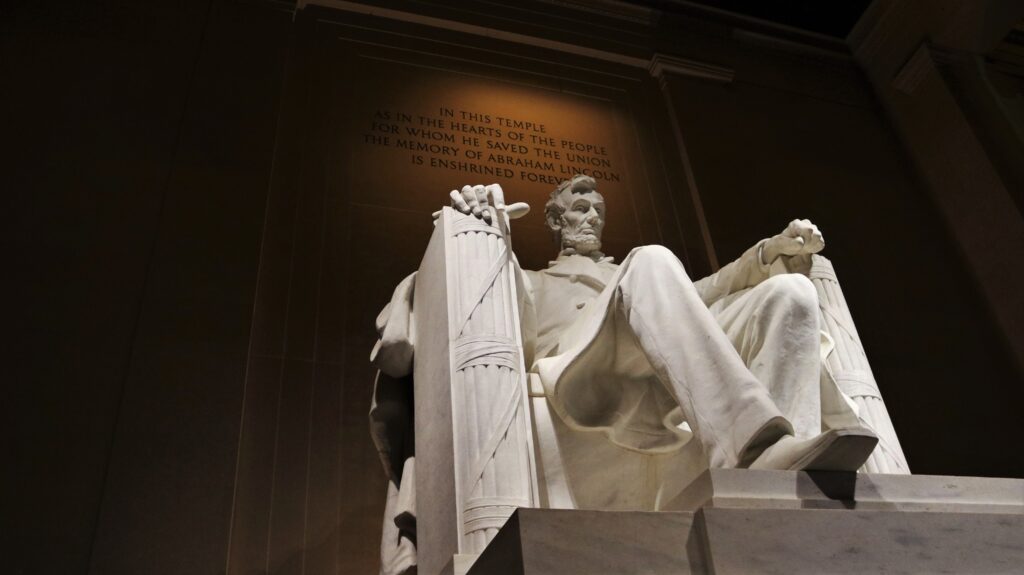
Photo by Ray Hennessy on Unsplash
About Post Author