Americans have pledged allegiance to “one nation under God” since the 1950s, but they disagree on what that means. The PRRI Christian nationalism report shows why this debate persists. About 46% prefer a country with many faiths, and 19% strongly prefer a Christian society. Another 34% sit in the middle, so opinions remain unsettled.
PRRI Measures Who Embraces or Rejects Christian Nationalism
A new PRRI Christian nationalism report, released Tuesday, Feb. 17, details sharp divisions over religion’s role. Melissa Deckman, PRRI’s CEO, said the fight centers on American identity. Since 2023, PRRI has used five questions to gauge support. They ask about declaring a Christian nation, tying Christianity to being American, and basing law on Christian values.
How Many Americans Fall Into Each Category
Based on September 2025 data, 11% qualify as “adherents” who agree with all five statements. Another 21% are “sympathizers” who agree with most statements. Twenty-seven percent are “rejectors,” and 37% are “skeptics,” but they do not fully reject the ideas. Overall, about a third fall into adherent or sympathizer groups, and two-thirds fall into skeptic or rejecter groups.
Party, Race, and Religious Practice Shape the Divide
PRRI found that 56% of Republicans fall into the adherent or sympathizer categories, and 82% of Democrats fall into the skeptic or rejecter categories. White evangelicals and Hispanic Protestants also skew toward support. White Christians and Christians of color show higher support than the unaffiliated and non-Christian faith groups. Deckman said Bible reading and prayer correlate with stronger support, because some see a Christian nation as aspirational. She added that this view can be strong in Black churches.
Geography and Trump-Era Policies Intensify the Conflict
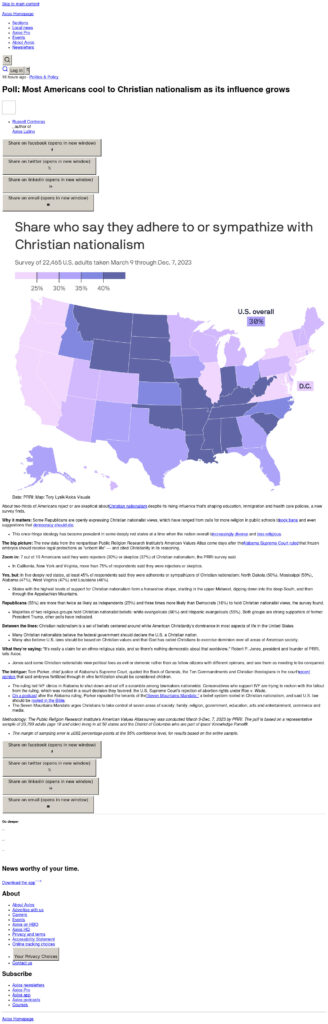
Support clusters in the Bible Belt and the Midwest, while coastal states trend toward skepticism or rejection. Arkansas, Mississippi, and West Virginia rank highest, while Massachusetts and Washington rank low. Deckman said the pattern tracks the Electoral College map, so geography mirrors polarization. Support for President Donald Trump’s policies rose among adherents and sympathizers, including views on immigration and deportations. Detractors warn the ideology fuels partisan lawmaking, but supporters argue it reflects biblical justice. Meanwhile, the Supreme Court is reviewing Trump’s birthright citizenship order for constitutionality.
Source:
Republicans, Southerners, Trump backers mostly likely to support Christian nationalist ideas
Photo by Kevin Charit on Unsplash
About Post Author