Google’s AI, Gemini, just came to the same conclusion as I did… and I think the way Gemini put it was profound.
Here is how it happened.
A few years ago, I realized that our translations of scripture often flow as much, if not more, from our theology as from the original-language text. So, I’ve been known to move quickly from the simple, confident definitions provided in Strong’s Concordance or Vine’s Dictionary to searching for academic articles that explore nuanced and historical understandings of Greek and Hebrew words.
In my dissertation, there is a chapter about the death of beauty in philosophy, modern art, and the church. In that chapter, I note that the Greek word kalon, meaning “beauty,” appears in the New Testament over 100 times but is almost never translated as “beauty.” The King James Version never renders it as “beauty,” whereas contemporary translations render it as “beauty” only once. It is normally translated as “good.”
During this weekend’s Easter Vigil, the creation story from Genesis chapters one and two was read. In this narrative, God declares many things “good.” I began wondering how the Septuagint translated the Hebrew. So, I started searching on Google for preliminary answers, and it turned into a discussion with Gemini.
I went on several side trails, which I will leave out of this story, but here is the gist: The Septuagint translates the Hebrew word tov as kalon. So, rather than having God declare it “good” each day, we could also translate it as God declaring what was made on each day of creation “beautiful.”
Then I asked Gemini why in the New Testament kalon is translated as “good” rather than “beautiful.” It gave the answer that I had read before and expected. Essentially, the argument is that in Koine Greek, there was a shift from aesthetics to moral and functional excellence in the use of the word kalon.
I asked why the New Testament writers used kalon instead of agathon, which means moral goodness. Gemini claimed this was because agathon is an inner nature, and kalon is more visible. It is a “goodness” people can see.
Next, I inquired as to why the Septuagint used Kalon rather than agathon when agathon seems to fit the narative better. Gemini then argued that the translators of the Septuagint wanted not only to emphasize the functional inner goodness of agathon but also to include the harmony of aesthetic and moral goodness in creation.
This is where the reasoning behind the translation choice starts to break. I asked Gemini why then kalon in the New Testament does not have an aesthetic connotation as it does in the Septuagint, since, as the argument for using kalon to translate the Septuagint claimed, kalon has an inherent aesthetic element. In short, why is kalon inherently aesthetic when translating the Hebrew to Greek in the Septuagint but not aesthetic when being translated from the New Testament Greek to English?
Gemini tried to say that this is due to the evolution from Classical Greek to Koine Greek and the theological filter of New Testament writers. At this point, Gemini is making things up and grasping at straws.
The Septuagint was written in Koine, not Classical Greek. I pointed this out. Gemini then relied on the New Testament theological filter as the reasoning. (Built into this is the idea that there was a fear of aesthetics in Jewish culture, which is totally wrong but not as important here.)
I pointed out to Gemini that the arguments seemed to be theological justifications rooted in contemporary thought rather than linguistic arguments rooted in the original language. The New Testament authors read and were formed by the Septuagint, so this idea of a theological filter shifting the meaning of this word makes little sense without additional support. I also argued that the Greek idea of beauty was hardly “shallow” (an assertion Gemini made). The Christian tradition latched onto the importance of beauty (kalon), especially as one of the transcendentals, and the premodern aesthetic tradition, particularly the Thomistic tradition, holds that beauty is that which, when perceived, causes delight. Further, this delight is intellectual, not merely sensuous.
Then I suggested to Gemini that the best answer to these questions might be that the English-speaking church over the last 400 years has had an anti-aesthetic bias that is not justified by the biblical text.
Gemini then changed its story to agree with me. I think there are two reasons for this.
- My reasoning was correct.
- Once I mentioned Thomistic thought, Gemini knew to look beyond the evangelical thinking that dominates the internet and, therefore, constituted most of Gemini’s source data.
The AI then provided several points supporting my suggestion. I obviously appreciated Gemini’s acquiescence and support. Then Gemini posed a question to me asking if this perspective suggests “that we should be more radical in retranslating these ‘moral’ passages to reflect their aesthetic roots?”
Of course, I agreed with Gemini’s suggestion that reflecting the aesthetic element in translation is appropriate.
Then came a beautiful paragraph from Gemini that I did not expect.
“That shift would fundamentally change how we read the New Testament. If we restore beauty (kalon) to these passages, the Christian life stops being a list of ‘moral duties’ and becomes an aesthetic participation in the divine order.”
Exactly!
I am becoming increasingly convinced that we evangelicals have misunderstood the Gospel. The Gospel is not a list of moral regulations that allow us to spend eternity in heaven floating on clouds and singing praises to God, or even God overlooking our failures and declaring us righteous so that we can have access to an eternity that we do not deserve.
The Gospel is Christ opening up the possibility for us to fully participate, in mind and body, in intellectual and sensuous knowing, with the Divine order. Yes, there is a resurrection, and that is a part of the life that Christ promises. Yes, there is grace offered despite our brokenness. But the enduring quality of “eternal” life is not limitless time but full participation.
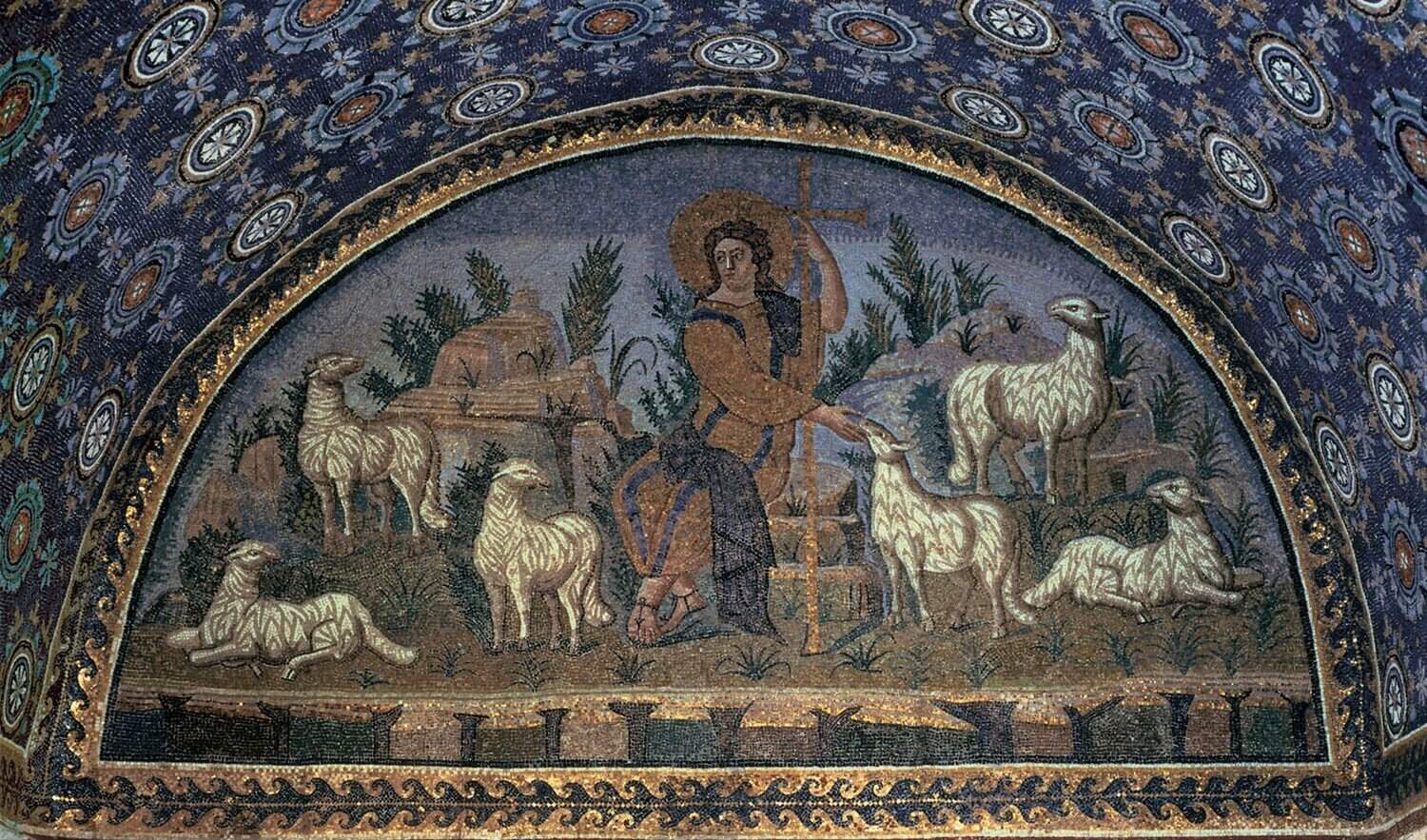
Christ is the Beautiful Shepherd.
Jesus tells us to do Beautiful works.
Timothy exhorts us to fight the Beautiful fight.
Beauty makes all the difference. In the United States, we strive to live the Good Life. Christ calls us to live a Beautiful life.
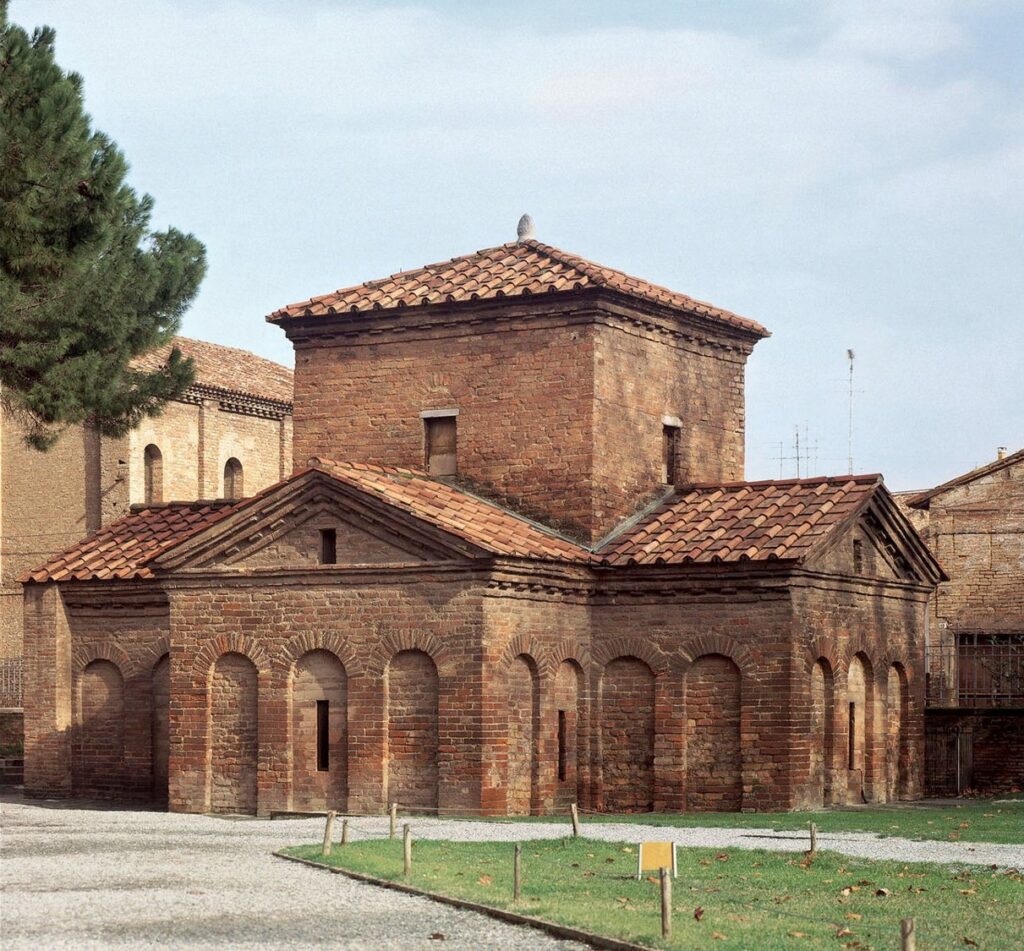
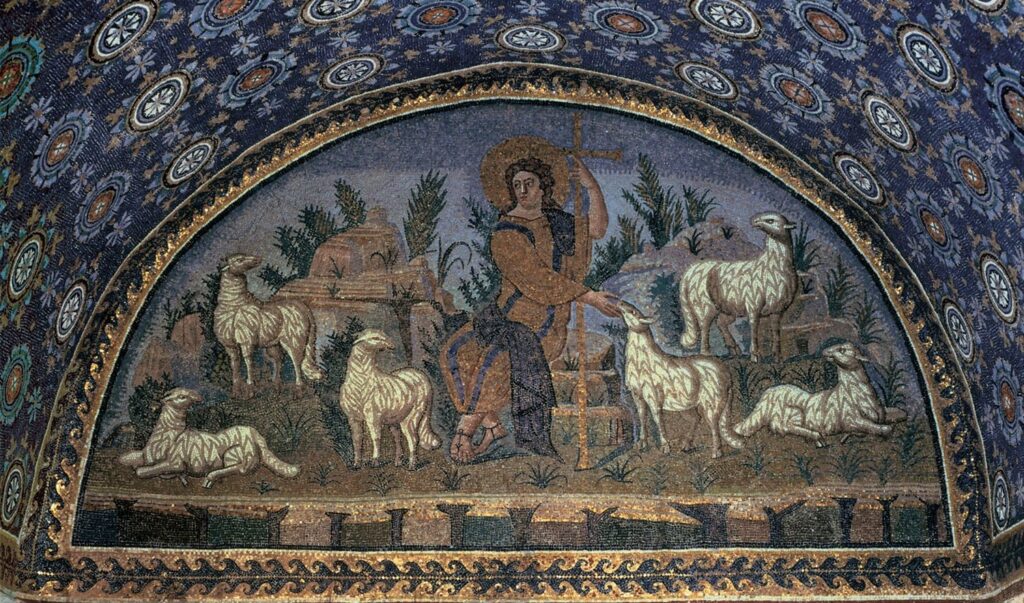
The Mausoleum of Galla Placidia is a small chapel with a plain exterior. The interior is richly decorated with mosaics of shimmering glass and gold. The rich interior and simple exterior served as a metaphor for the Christian life. The Good Shepherd embraces a luxuriant beauty adapting Greek and Roman iconography to Christian meaning embracing a unified conception of kalon and agathon.
About Post Author