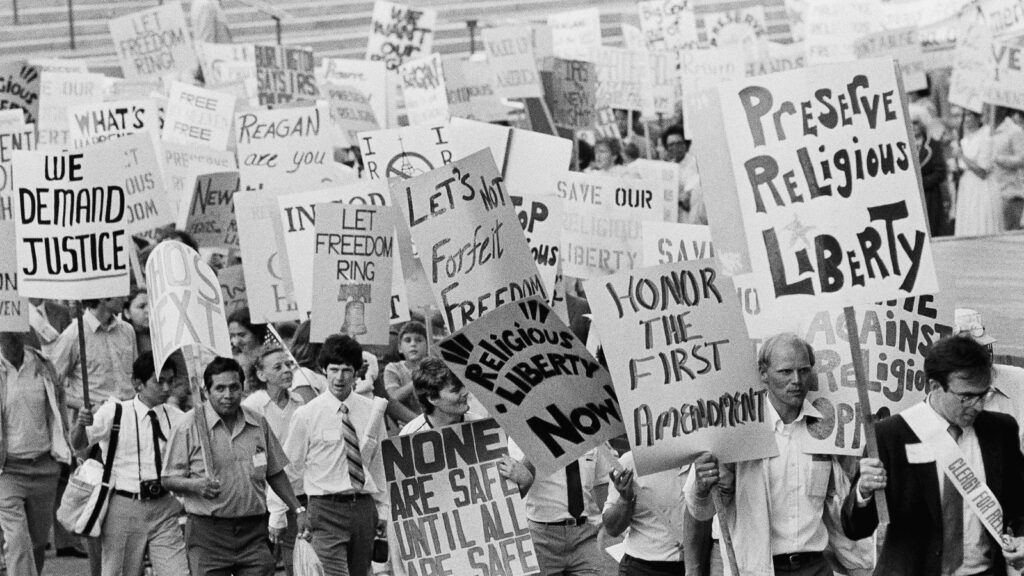
Guidance on Religious Expression
The U.S. Office of Personnel Management (OPM) issued a memorandum in July clarifying that federal employees may openly practice and discuss their religious beliefs at work. The guidance allows prayer circles, sharing of beliefs, and even efforts to persuade others of one’s religious views, so long as they are not harassing. OPM Director Scott Kupor praised the policy, calling it a step toward ensuring that “federal employees should never have to choose between their faith and their career.”
Support for Expanded Religious Rights
Supporters argue the memo strengthens constitutional protections for federal employees. They say it affirms that supervisors and staff alike may display religious items, hold discussions about faith, and request accommodations. Proponents believe the change ensures the federal workplace welcomes Americans of all faiths, providing equal footing for religious expression in government employment.
Concerns About Christian Privilege
Critics warn the policy will not play out equally. They point to Christianity’s dominance in the U.S., where 62% of adults identify as Christian. Skeptics argue the memo primarily benefits white evangelical Protestants, who already enjoy structural privilege. Examples include Secret Service Agent Anshdeep Singh Bhatia’s legal fight for the right to wear his Sikh turban, contrasted with Christianity’s normalized Sunday observance. Critics argue that omitting minority faith symbols while repeating Christian imagery shows a bias toward Christianity.
Fears of Coercion and Discrimination
Opponents also note the policy empowers supervisors to evangelize to subordinates, raising fears of workplace coercion. Groups such as the Secular Coalition argue this invites harassment and marginalization of non-Christian employees. Civil liberties advocates highlight Trump’s previous travel ban on Muslim-majority nations and his establishment of a “Task Force to Eradicate Anti-Christian Bias” as evidence of broader Christian nationalist goals. The Interfaith Alliance disputes claims of widespread anti-Christian discrimination, warning the task force reframes LGBTQ+ protections and reproductive rights as attacks on Christianity.
Critics See Christian Nationalist Agenda
Observers argue the memo, paired with Trump’s rhetoric, advances a vision of Christian nationalism. They fear non-Christians in government may face pressure to conform or risk career setbacks. Detractors conclude that the guidance, while framed as equal protection, effectively legitimizes a hierarchy where Christianity is privileged, undermining pluralism in federal workplaces.
Source:
Trump’s Religious Freedom Memo Is Good News for Christian Nationalists
Photo by Mehdi Sepehri on Unsplash
About Post Author