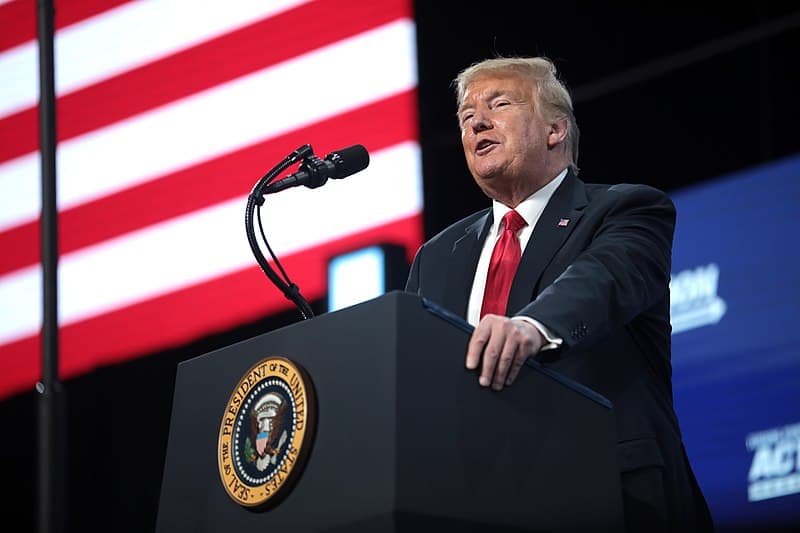
On Jan. 20, 2025, Donald Trump will take the presidential oath of office: “I do solemnly swear that I will faithfully execute the Office of President of the United States, and will to the best of my ability, preserve, protect and defend the Constitution of the United States.” And then he will probably add the phrase “so help me God.”
Those four little words are not in the Constitution,
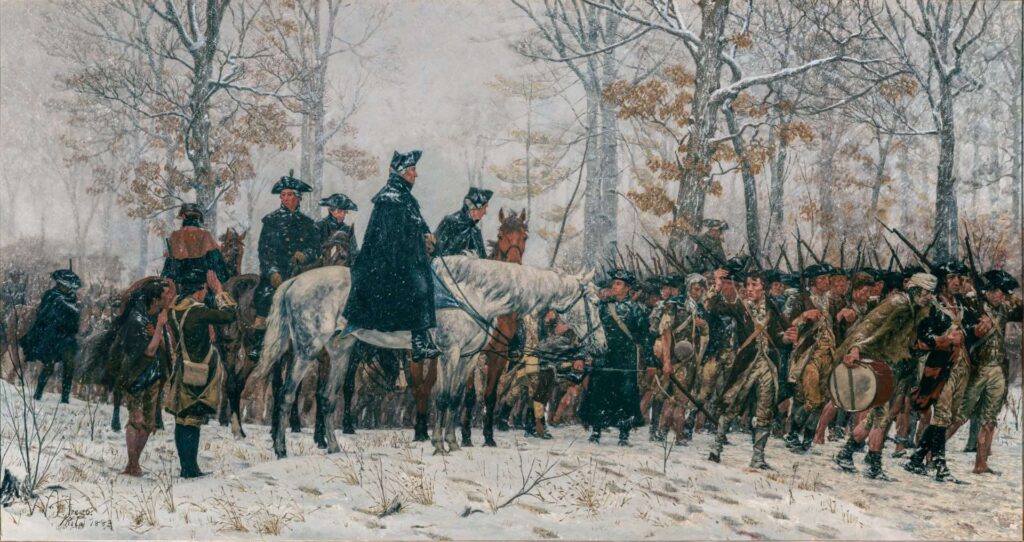
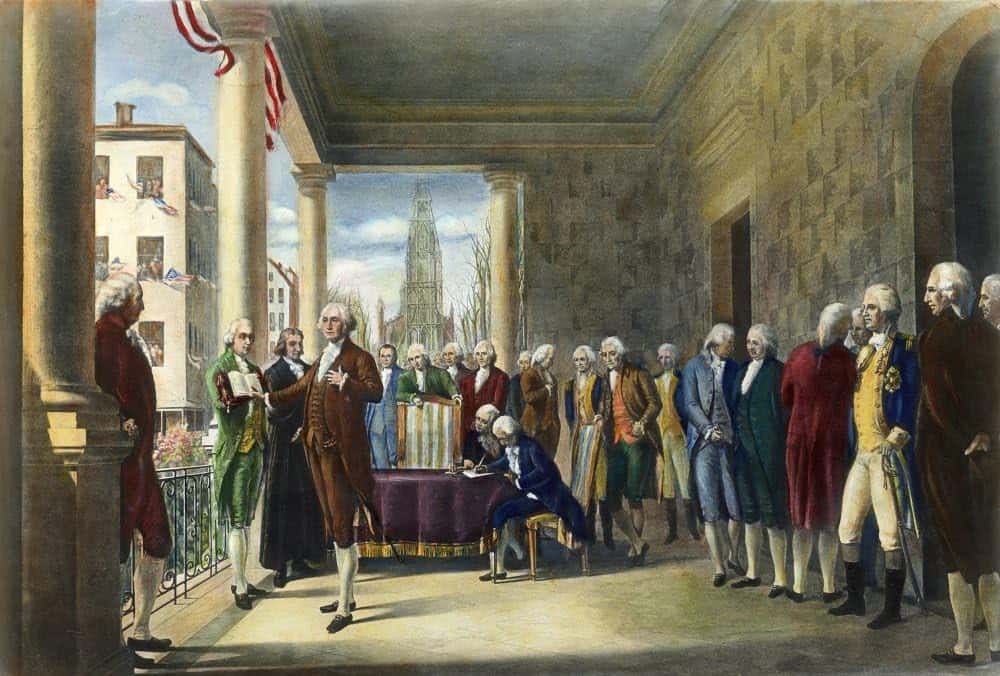
but for many Americans, the phrase has been a part of the oath ever since George Washington was said to have added it 236 years ago.
But did Washington really say “so help me God?” There is no evidence that he did. In fact, no one said he did until 1854, 65 years later, when Rufus Griswold, an editor and literary critic, told the story in a book titled “The Republican Court”: “[Washington] added, with fervor, his eyes closed, that his whole soul might be absorbed in the supplication, ‘So help me God!’”
As a professor of U.S. history, I don’t care if Washington said it or not; my interest is in how quickly “so help me God” became established in the American national memory.
For a 2014 article titled “In Griswold We Trust,” I used various online databases such as Google Books, Internet Archive, American Periodicals Series and Newspapers.com to search for the phrase. Before 1854, there are no accounts of Washington saying “so help me God” at the end of the oath – at least in the millions of print records covered by the databases. Then Griswold told the story, and by the end of the 1850s, almost a dozen books and magazine articles had repeated it. Griswold’s story was so thoroughly accepted that, through the 20th century, no one, including academic scholars, thought to question it.
The best way to understand Griswold’s mythic insertion of “so help me God” into the presidential oath is through the lens of Christian nationalism. While the phrase is relatively new, Christian nationalism itself has been around for a long time.
Second Great Awakening
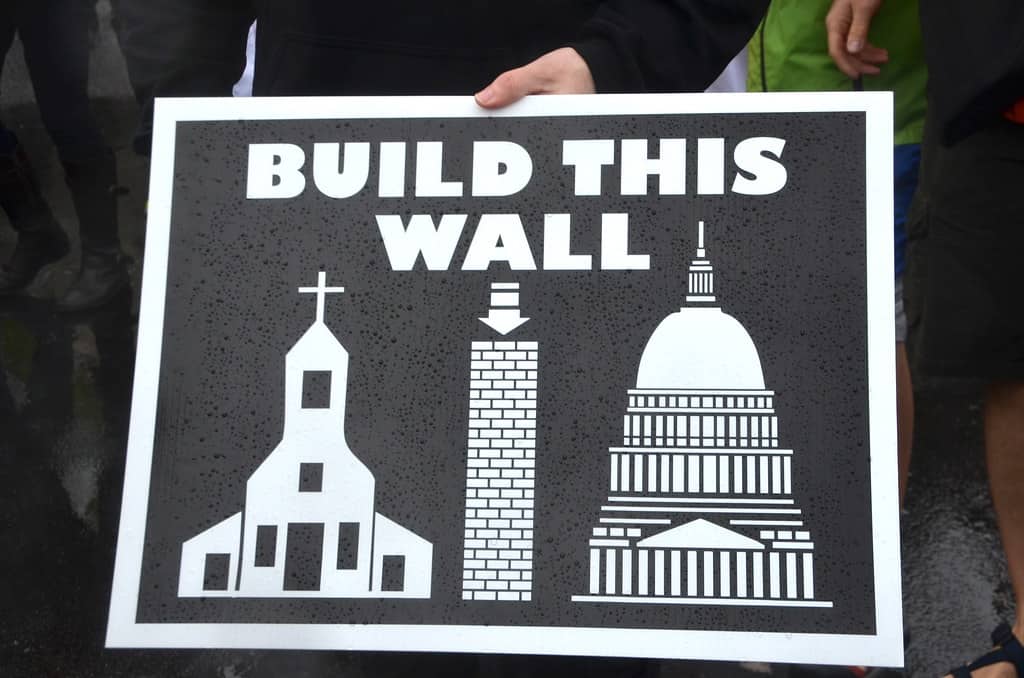
Scholars Andrew Whitehead and Samuel Perry have defined Christian nationalism as “a cultural framework … that idealizes and advocates a fusion of Christianity with American civic life.”
Christian nationalism was big in the early 19th century. Legal scholar Steven K. Green noted in his 2015 book, “Inventing a Christian America,” that the Second Great Awakening, a Protestant evangelical revival movement that peaked in the 1830s, “brought about … a desire to see religious values reflected in the nation’s culture and institutions.”
Rev. Ezra Stiles Ely, a Presbyterian minister in Philadelphia, took things a step further when he told his congregation in 1828 that only leaders “known to be avowedly Christians” should be elected.
In the words of religious studies scholar Richard Hughes, many participants in the Second Great Awakening “sought to transform the nation into a Christian Republic.” In its aftermath, Griswold’s account of Washington prayerfully adding “so help me God” to the presidential oath became part of America’s Christian creation myth.
Another age, another “so help me God” story
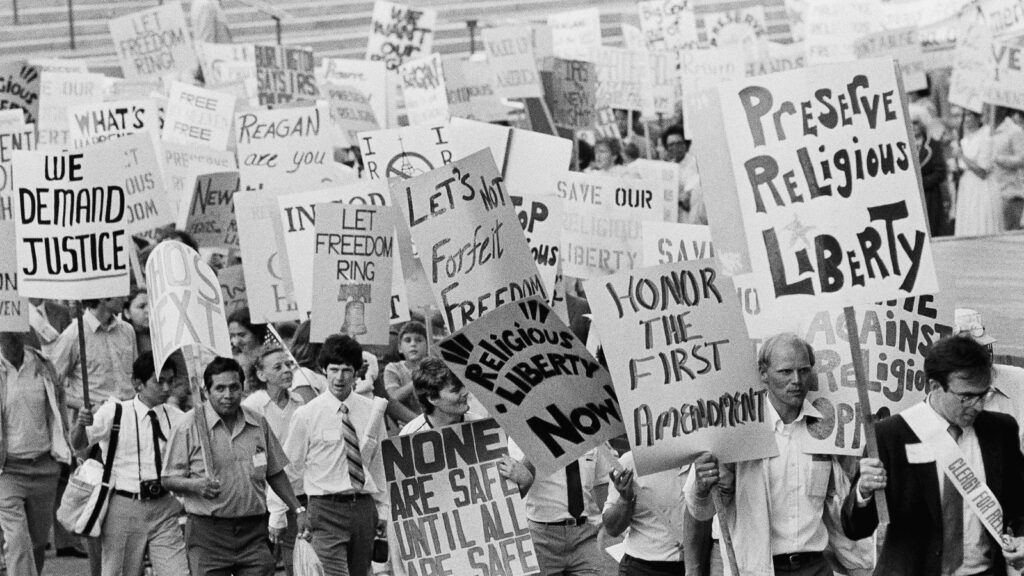
Like many cultural ideas, Christian nationalism has waxed and waned through American history. It was popular again in the years just after World War II, a time of increased tensions between the United States and the “godless communists” of the Soviet Union.
Religion was an important weapon in the Cold War. As Sen. Joseph McCarthy said, “The fate of the world rests with the clash between the atheism of Moscow and the Christian spirit throughout other parts of the world.”
In this Cold War context, the U.S. added “under God” to the Pledge of Allegiance, made “In God We Trust” the country’s national motto and created a new version of the Griswold story: that every president, not just Washington, had ended their oath of office with “so help me God.”

United States Government Publishing Office via Wikimedia Commons
Actually, there is no compelling evidence that any president added “so help me God” before September 1881, when Chester A. Arthur was sworn in after the death of James Garfield.
But it was important in Cold War America to prove that it was a Christian nation, so a new story was added to the American creation myth: Through the nation’s history, all presidents invoked God as part of their oath.
A search of the databases shows that this story began in 1948. One of the earliest examples was from Frank Waldrop, editor of the Washington Times-Herald, responding to the Supreme Court’s decision in McCollum v. Board of Education that it was unconstitutional for public schools to promote religion. “Every President from Washington down to Harry Truman has always taken that oath with his hand on the Bible,” Waldrop wrote, “and every President … has added the undeniably religious phrase, ‘So help me, God.’”
Waldrop used the assertion that presidents have all said “so help me God” as an argument for inserting religion into public schools. This is an important point about Christian nationalism: As scholar Eric McDaniel and others have shown, it is not just a view of the past; it is a call for action, specifically to reclaim America as a “holy land.”
Christian nationalism relies on a flawed understanding of the American past, but it has become an increasingly important part of our history.
About Post Author