Planned Parenthood President Alexis McGill Johnson warns that a reproductive health crisis threatens Black women ahead of the midterm elections. Speaking with The Root, Johnson discussed abortion restrictions and the consequences of federal funding cuts.
The yearlong Planned Parenthood funding ban, enacted under President Donald Trump’s One Big Beautiful Bill, has expired. But Johnson says the financial damage continues to affect health centers nationwide.
Funding reductions have limited access to STI testing, contraception and cancer screenings. And these consequences extend to Democratic-led states where abortion remains legal.
Abortion bans worsen Black maternal mortality concerns
Johnson emphasized the disproportionate dangers Black women face under abortion restrictions. Most Black women live in states with abortion bans, according to Johnson.
Black women already experience maternal mortality rates three times higher than other groups. Johnson also cited a 234% increase in Black maternal mortality in states with abortion bans.
She described women facing life-threatening pregnancy complications while struggling to obtain medical treatment. Some, she said, have been forced to wait until their conditions deteriorated before receiving essential care.
Johnson also described Black men witnessing their partners’ medical concerns being ignored. She believes these experiences demonstrate how restrictions affect the broader health care system.
Johnson calls for federal protections and stronger funding
As the midterm elections approach, Johnson wants lawmakers to confront barriers that prevent women from obtaining necessary care.
She advocates federal legislation protecting reproductive freedom and eventually a constitutional amendment. She also wants stronger funding for Title X, which supports access to contraception for low-income communities.
Additionally, Johnson calls for comprehensive medical research that reflects women’s experiences, particularly those of Black women.
Reproductive rights remain a central election concern
Johnson and reproductive rights supporters view the reproductive health crisis as an urgent policy issue. They argue that abortion restrictions and funding cuts place Black women at greater risk.
Their concerns extend beyond abortion to preventive screenings, affordable contraception and treatment during pregnancy.
Johnson wants politicians to listen directly to families affected by these barriers. She argues that reproductive health policy must center women’s bodies, experiences and medical needs.
Her priorities include restoring access to essential services and establishing lasting federal protections for reproductive freedom.
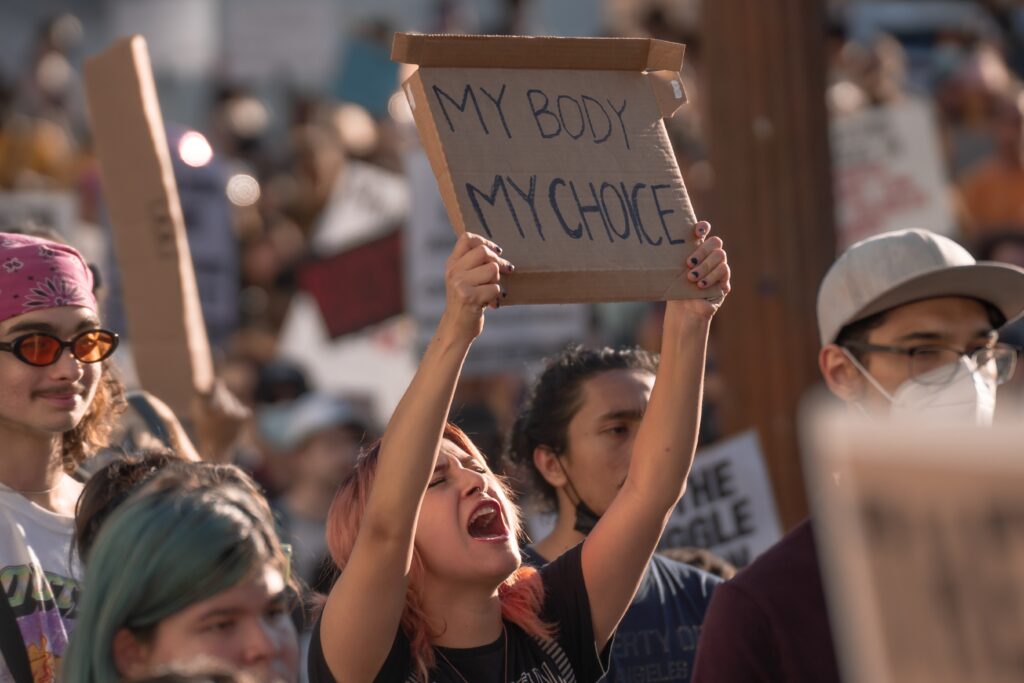
Photo by Eye for Ebony on Unsplash
About Post Author