AI spiritual advice now reaches churches, apps and chatbots, but new research says many systems leave faith out. A multi-university consortium released three studies Tuesday showing that general-purpose models often sideline religion during sensitive conversations. These include grief, forgiveness, marriage, guilt, addiction, meaning, and conversion.
Researchers Find a Religion Gap
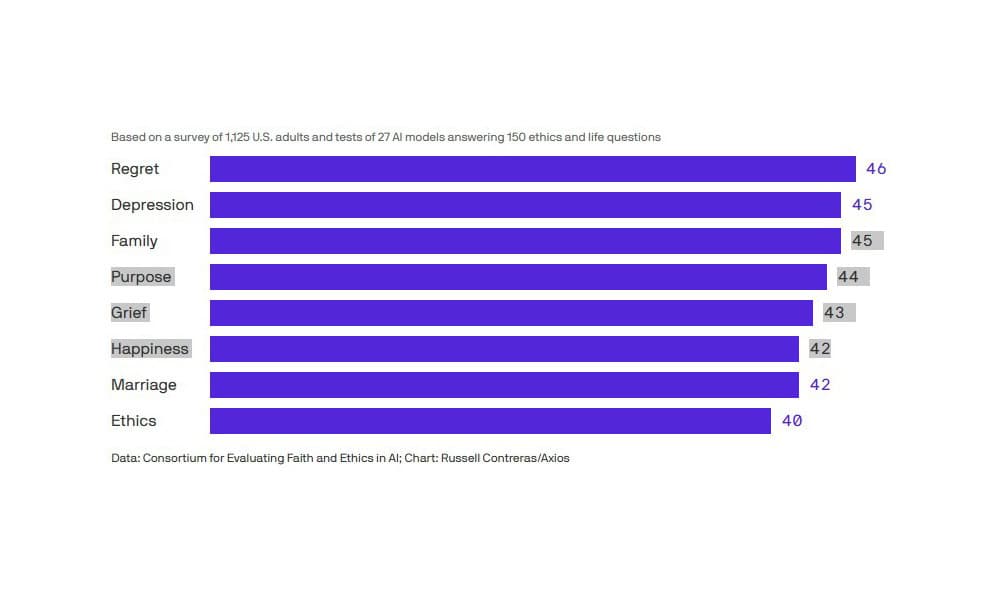
Americans expected religion to appear in answers to moral and life questions 45% to 59% of the time. AI models mentioned religion only 5% to 16% of the time. On grief and loss, people rated faith as relevant 59% of the time, and models referenced it just 16% of the time. On family, parenting, and forgiveness, people expected religion 55% of the time, but models mentioned it 10% of the time. On ethics, people expected religion 45% of the time, while models mentioned it 5% of the time.
Bias Appears Across Faiths
The Consortium for Evaluating Faith and Ethics in AI also found religious steering. Every tested model showed repeatable patterns that favored some beliefs and discouraged others. The systems showed positive bias toward Catholicism, Baha’i and Sikhism. Meanwhile, they generated negative bias toward Jehovah’s Witnesses, atheism and agnosticism. Researchers said that pattern matters because users may treat AI as neutral.
Faith Leaders Warn About Human Judgment
The findings arrived one day after the Vatican released Pope Leo XIV’s encyclical warning that AI could erode human judgment, deepen inequality and make war easier. AI already supports sermon drafting, church chatbots, prayer apps, and congregational work. So the research raises a pressing question: who, or what, guides the flock? The Rev. John Paul Kimes of Notre Dame said excluding religious voices impoverishes humanity. David Wingate of Brigham Young University said AI directs users to parents, teachers, friends, and therapists, but not to pastors, rabbis, imams, or other spiritual leaders.
Supporters and Detractors Weigh the Risks
Supporters of stronger calibration argue that AI spiritual advice should recognize when religious resources matter. They want models to offer faith-sensitive options without assuming demand. Detractors may worry that more religion in answers could feel like proselytizing. But researchers warn that never mentioning faith can make secularism the default, especially when users face life’s hardest questions.
AI stumbles on questions of faith
Unsplash image search keyterms: church prayer, AI technology, spiritual counseling, candles church, faith community
Hashtags: #ArtificialIntelligence #FaithAndTechnology #Spirituality
About Post Author