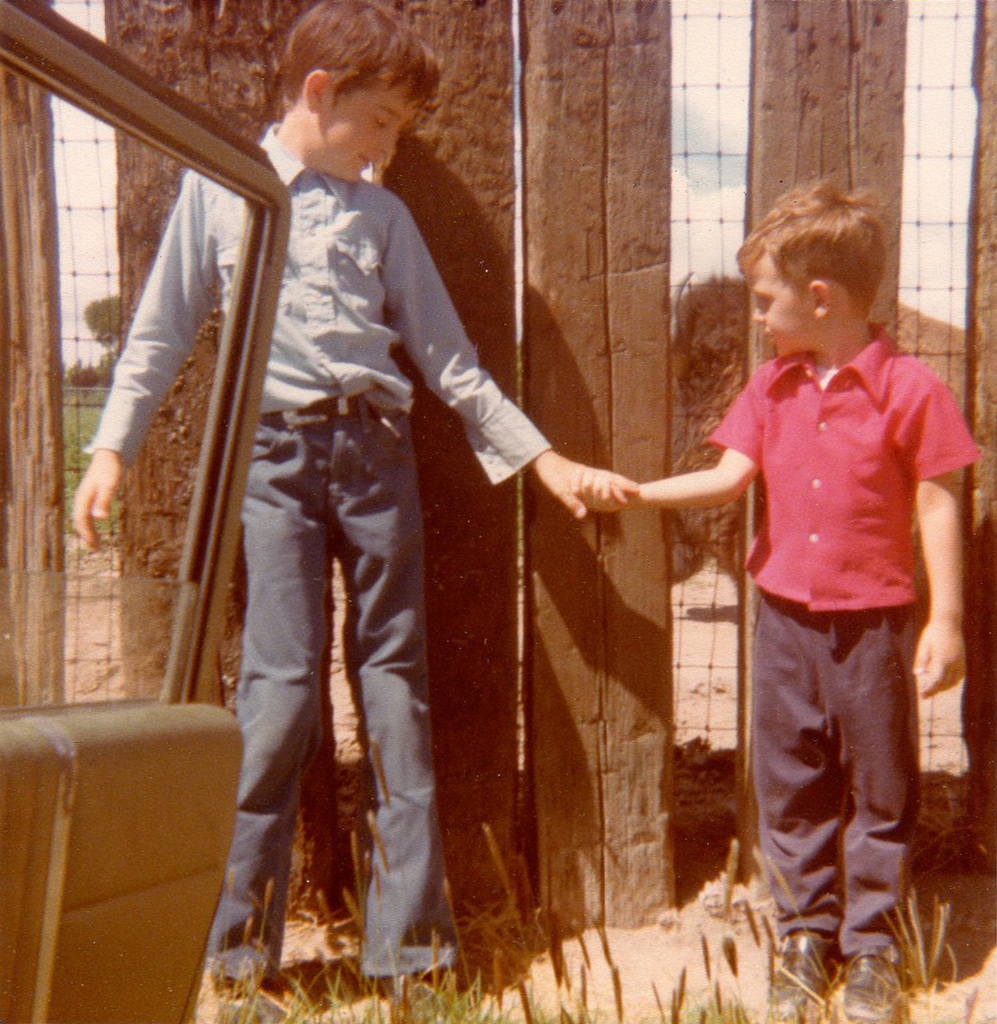
“If you look at his friend Jake, you would think that Jake is weird because of how he dresses, but Vershal – even though he looks normal – he’s the one who is really weird.”
I was standing at the bottom of the stairwell at my high school when I overheard a classmate say that sometime in the late 1990s. I wasn’t supposed to hear it. The person who said it was speaking to their friend at the top of the stairs, where they couldn’t see me from my position near the first floor.
I didn’t say anything. I laughed to myself and made my way to my next class, sharing what I’d heard with Jake. It didn’t bother us. We knew we were weird.
Language shapes perception
I’ve been thinking about that overheard conversation since the Democratic Party’s chosen spokespeople started using the word “weird” to describe the GOP. It’s been an abrupt change in messaging—and I don’t know if it will hold through the fall—but I think it’s an effective rhetorical tactic for the moment.
It works because it has an overt purpose—to tell the young folks that one party is fundamentally uncool—but also because it subtly subverts a previous narrative.
In literary analysis, the true intention of stories sometimes gets overlooked for the easiest reading. That’s why, for example, people fixate on reading Animal Farm as an allegory about the Soviet Union, which was considered the pressing threat at the time that it was written, instead of recognizing that it’s actually a fable about how all authoritarian systems operate.
There’s another Orwell story that often gets misread – 1984. Many readers understand it as a story about people becoming increasingly comfortable with ceding the most intimate details of their lives to the government, but it’s really about the tactics that political powers use to gain that space in people’s lives. One of the ways that happens is by reshaping people’s perceived reality by gaslighting or outright coercion – think of the book’s famous “2+2=5” moment – often by reshaping language. “War is peace,” the party’s motto goes. “Freedom is slavery. Ignorance is strength.”
Words, the book teaches, have power.
The GOP has fundamentally understood and mastered this technique for years. Think of how the word “woke” has not only been injected into the common discourse but completely redefined. The original meaning, as it arose out of Black American vernacular in the early 20th century and was used until seven or eight years ago, was that someone who was woke was someone who perceived how the world really worked and was wise to the ways of those opposed to them and those who sought to manipulate them.
Now, it has essentially been redefined by the American right to mean everything that, in 1984’s lingo, was “ungood.” The second the word is deployed, whether against a person or concept, hearers know they are supposed to hate it – or at least that the speaker wants them to hate it.
So why have the Democrats started using “weird?” It’s also about power.
For years now, people on the center-left have spoken about the GOP and their standard bearer, Donald Trump, in terms of existential threat. The apocalyptic framing didn’t just serve as a warning cry; it served as an unintentional apotheosis. It said, “This person is powerful enough to end worlds and create new ones.” Coupled with Trump’s cult of personality from within his own camp, such language made him appear stronger than he was to people who were neither sold on or dismissive of him; when repeated endlessly, it made him and his movement seem like an inevitability to those who already feared what he represented.
The move to call Trump, his vice presidential pick, and those who want to prop them up “weird” takes away that power. It says that while they are a threat, it is because their ideas do not represent those of everyday people, that they are dangerous not because they are Nietzschean Übermenschen but because they are unwashed, overly opinionated fools bumping around dangerously close to a nuclear weapon.
The second reason it has been deployed more than once is simply that Trump and his liegemen hate it, and their responses to it could best be described as “increasingly flailing.” Such protestations can easily be reframed with a glib response: “The lady doth protest too much.”
A lot of people with authoritarian tendencies are deeply insecure and hate being mocked. But mockery, in some ways, is also a validation – it says that the mocker has to go on the attack because the target of their mockery is viable. “Weird,” however, is dismissive. It’s a diss because it is a shrug, saying that the reason people keep paying attention to those weirdos is because they are acting out for attention, not because they have good ideas, and now it’s time to turn to someone with good ideas.
The lasting test
When I first heard myself described as weird, it didn’t bother me because the opinion of the person who said it didn’t matter to me.
Now, in 2024, when I hear the same language applied to politicians occupying a very different headspace than I do, it hasn’t gone through a significant redefinition, but the way it is applied at scale could have much weightier impact. Will that impact matter in the long term? How much influence “weird” will ultimately have in shaping people’s responses and how long that influence will last may be the true test of the power of a single word.
About Post Author