Today is the 250th anniversary of the adoption of the Declaration of Independence. It is our nation’s 250th birthday!! This is a momentous day. Yet I find myself sitting here with a profound and unexpected sense of sadness… and loss.
I was three when our nation turned 200. I don’t remember the celebrations, but I remember a sense of pride that permeated our nation for several years after.
The forty to fifty years prior to our 200th birthday were filled with things like the Civil Rights Movement, the Labor and Farmworkers Movements, the Anti-War Movement, the New Deal Era, the War on Poverty, the Moon Landing, the victory in World War II, and the rise of the United States as the primary economic, political, military, and cultural power in the world.
The fifty years leading up to today saw some momentous achievements. The end of the Cold War and the election of our nation’s first Black president come to mind. But we have also seen the expansion of economic inequality to levels never seen before, regressions in social movements and civil rights, mass incarceration, erosion of voting rights, a violent attempt to stop the transfer of power in our Capitol, and levels of corporate and political corruption previously unimaginable. Many believe that the economic, social, and political guardrails established over the first two hundred plus years of our nation have been stressed to a point of risking rupture in the last few years.
But my sadness is about more than that. It’s about a childhood ritual I’ll likely never again experience. It’s about what I’ve watched happen to friendships and family over the last decade. And it’s about a theological distinction I’ve come to believe undergirds it all.
Some of my fondest childhood memories were from the Fourth of July. Every year, we spent weeks cleaning up the ranch, the yard, the pool, and our house to host a huge party. We played games, swam, barbecued, sang patriotic songs, and watched fireworks. It was a huge event. Neighbors were invited. All our friends were invited. Our church was invited. The entire family came. Even lawyers and professional connections of my dad would come.
My dad made his reputation as a civil rights lawyer. He was a judge during most of my childhood, and when I was eleven, he was appointed the first Hispanic on the California Supreme Court. He was seen as a liberal jurist. After his time on the courts, he negotiated an arrangement with a Beverly Hills law firm that later merged with a major New York law firm, which allowed him to spend a significant amount of his time on pro bono cases helping those who needed it. That is the work he was doing when I was in high school.
My life, though, was rather removed from my dad’s legal and civil rights work. My mom was from the Appalachian Mountains in northeast Tennessee. She enjoyed the rural life, so I grew up on a 30-acre ranchette. I was in 4-H and FFA, and in high school, I was very involved in basketball.
But even more central was our engagement with our church. Three times a week, we attended a conservative, small, rural Southern Baptist church. This church was so small that when we first joined, our family doubled its size. When the church moved from the one-room schoolhouse where it started to our own building, my family helped build it. We helped raise walls, and as a preteen, I climbed on the roof with a hammer and nails.
Guests were often surprised to see my liberal father leading the large gathering as we sang political songs, or at least actively participating, since he wasn’t much of a singer. He always spoke about the promise of our nation at these events. He was not naive. He attended segregated schools in Orange County, fought for rural mail delivery that was denied to poor Mexican communities, and challenged segregated dances. But he also witnessed and participated in our nation’s growth toward justice during most of the twentieth century. His love for our nation was aspirational. He knew the problems. He fought against those problems. But he believed that we were working toward a more perfect union.
Our Fourth of July celebration was in many ways the perfect expression of our family values. Most of our neighbors in our rural Northern California community and in our tiny Baptist church were not politically liberal. In fact, they were pretty conservative. They had never been to the White House or walked the halls of power. Some were financially successful; others were poor. But all were equal. We all played games, jumped in the pool, and ate hamburgers and tri-tip steak together. We listened to patriotic music as the children who were old enough lit fireworks on my parents’ driveway for us all to enjoy.
Fourth of July at our house was what America was meant to be. Neighbors, family, friends, colleagues, and our church all together celebrating the promise of our nation with no concern about political orientation, religious belief, or ethnicity. It was one of the closest expressions to Martin Luther King Jr.’s Beloved Community that I have seen in my life. This was the nation I was raised to love. This is the vision I have held to during my adult life.
As today approached, I could feel it in my body. I knew I would not appreciate it the same way that I would have as a kid.
Last week, I saw a house decked out for the 250th anniversary, which led to the following post on social media.
Growing up, July 4th was one of the major holidays at our house. My Dad was a Chicano civil rights leader and certainly knew the failures of our country. But he was aspirational. He believed in the America we could be. Driving home from a movie, saw a house with lights decked out for the 250th anniversary of the signing of the Declaration of Independence. All I could think was, “I wish I felt better about our country on our 250th anniversary.”
My parents would have loved the 4th this year. They would have held a big party at our ranch dedicated to the best of what this nation could be. But this year my family is split between Tennessee and Nebraska. The forces that drove me from TN are related to the religious fundamentalist ideologies tugging at the fabric of our nation. I won’t be holding my wife’s hand as we watch fireworks lit on my parent’s driveway. We will be separated by 1,000 miles.
I wish I had my father’s optimism. I wish I had no doubts as to the direction of the arc of history. I wish that in a couple of weeks I could watch fireworks in celebration of our nation. I wish…
So I could feel the sadness coming. Today, though, it hits me with an all-encompassing weight.
I believe this weight is because the forces tearing at the fabric of our nation are also tearing at the fabric of the Church, the fabric of friendships, and the fabric of many families, including mine.
The sadness isn’t only personal, though. It’s about the heart I have seen reflected around me. I remember attending a men’s Bible study when I lived in the Bay Area. As an icebreaker, the pastors asked us, “If you could go back to any time in history, when would you go?” The gentleman before me said he would go back and kill Obama as a baby. This was during Obama’s second term. I remember being shocked that he would say this. I also remember being shocked that no other man in the group seemed shocked. I was next, so I said, “I would go back in time and prevent [name redacted] from committing murder.” We then laughed it off, and I gave a second answer that did not call anyone out. But it was not funny. What I did not understand then was how much it reflected the direction our nation and “Christianity” were heading.
Two weeks ago, I saw a post about the red MAGA hat as a symbol of belonging. The post related to an experience of a Black man who wore a MAGA hat as an experiment and was intrigued by the entry the hat gave him into certain groups, though wearing the hat did not give him enough authority to disagree with those groups.
The post and story inspired several thoughts I shared, one of which relates here.
I have a group of friends who have been close since middle school and early high school. The four of us still maintain an active text thread. We are very different religiously and politically. I am the only one who is religious, but I am the most liberal of the group. One of the others is socially liberal and economically more centrist. Another is libertarian. And another is conservative, gun-owning, maybe even hoarding. We have never agreed politically, but we have always respected each other and been friends. Those on the conservative side voted for Trump but don’t wear red hats. But over the last few years, there has been a tension that never existed before. There is the occasional poking of the bear, but for the most part, politics has become an uncomfortable topic that we discuss when we are feeling brave but often tiptoe around…. The tensions pointed to around the red hat run deep, even among those who don’t wear the hat. The damage to our nation even seeps into forty-year friendships. Even those who don’t wear the identity markers are changed by the tribalistic lines being drawn.
The problems that seem so poignant to me today are more than political; they are theological and personal. There is a deep thread in our nation to which they point. Theologically, I might call it a root sin. The political tensions are the fruit of that sin.
I was raised in a church that focused, though imperfectly, on love. I remember singing as a child, “Beloved, let us love one another, for love is of God and anyone who loveth knoweth God. He that loveth not, knoweth not God.” These words from 1 John 4:7-8 were my favorite song as a child. Today they are still the heart of my faith.
I was raised both at home and at school to see the potential of the United States. I was taught to have hope that our nation would strive to be the more perfect union referenced in our founding document. Our nation had not been perfect; we had failed in many areas, but we were striving toward the good. I was taught that the brilliance of the U.S. Constitution lay in its ability to be amended and to evolve with the times without losing its core values.
I was raised in a family that saw service as a virtue and family as both a support and a commitment. We would bend over backward to help those in our community and church. We would bend over backward to help family.
My sadness and sense of loss today come, I believe, from the reality that my nation, my faith community, and my family all took the lessons I was taught and internalized them very differently.
Underneath the politics, I think there’s a theological root. I remember when I first saw it. One aspect of why I moved from the Baptist tradition to the Anglican tradition is a discussion I had with my last Baptist pastor after one of his sermons. He was preaching on the Book of Revelation, as Baptist pastors are known to do. In his sermon, he referenced bronze as a symbol of judgment. After the sermon, I told him that I wasn’t convinced that bronze was a symbol for anything in that passage. However, if bronze was a symbol for anything, considering the bronze pool outside the temple and the brazen serpent, I thought it might be a symbol of mercy. After we spoke for a while, I realized that he was viewing scripture through the lens of judgment, and I was viewing it through the lens of grace. This major realization explained many theological disagreements I had experienced with other Baptists. When we moved a year or so later, we took the opportunity to find a tradition we felt was more rooted in grace.
This distinction comes to mind in the recent theological disagreement between Senator Rev. Raphael Warnock and Speaker of the House Mike Johnson. Johnson views the Matthew 25 judgment recounted by Jesus “I was hungry and you gave me no food, I was thirsty and you gave me nothing to drink, I was a stranger and you did not welcome me, naked and you did not give me clothing, sick and in prison and you did not visit me…. Truly I tell you, just as you did not do it to one of the least of these, you did not do it to me.” to be only applicable to the individual. Warnock views the passage as more communal and societal.
I could argue that Warnock’s approach is more consistent with the less individualistic and more communal Jewish mindset of Jesus’ time. But even assuming today’s individualistic mindset, it seems that a personal call to care for the least of these as caring for Jesus would not result in Christians exercising their individual votes to prioritize policies that harm those whom Jesus called us to serve as if they were Him. It is like saying, if we personally see Jesus, we should give Him food, but we should vote for our government not to give Him food. This seems nonsensical to me… until I remember that I am looking at scripture through grace and many are looking at it through a lens of judgment. They look at Romans 13 and see government as God’s tool of judgment. The government is His sword.
Similar to how they view the faith as “once delivered to the saints,” they view the nation as “once delivered to the citizens.” They do not view our Christian witness as progressing toward an expression that mirrors the love taught and exemplified by Christ. They view it as something to which we must return. Similarly, our nation is not seeking to progress toward a more perfect union; it must return to the original expression, which was more perfect than what we see today.
This means that the sins of our past, such as slavery, ethnic genocide, conquest, and racism, need to be forgotten or justified. Our history must be idealized so that we can return to it. We long for a sanitized conception of the generation of the founders, just as we long for a sanitized conception of the Church before Constantine “corrupted it.” We need to cast judgment on the ways our nation and faith have fallen, rather than offering grace to a Church and a nation seeking, and often failing, to become more perfect.
The last time my siblings got together at my parents’ ranch, I wasn’t invited. I’ve written elsewhere about the ways in which those relationships deteriorated; I don’t need to belabor it here. A story from my parents’ 50th anniversary celebration may help us work toward my point, though. We held the celebration at the small country church I helped build as a child. After a successful celebration, my siblings began praising themselves for leaving the church cleaner than it had been before we arrived. We had always been taught to leave it better. We had not been taught to praise ourselves for doing so. Leaving the church cleaner should have been an act of service, not an opportunity for praise.
They learned the lesson, but not the heart behind the lesson. It seems that for a few decades, I have seen the Church and the nation demonstrating that we never learned the heart behind the lessons.
In both the New Testament and the Old Testament, it says that God desires mercy, not sacrifice. Multiple times the prophets declared that God hates our offerings, or at least the Israelites’ offerings. God hates something that He commanded. The offerings weren’t the point, and they certainly weren’t meant as a way to feed our pride, as they later became for the Pharisees. The offerings were an object lesson to teach us about God’s mercy, grace, and love. As Paul wrote in Galatians, the law was our teacher until Christ came, who came in love so that we could have faith and no longer needed the law to teach us about judgment and grace.
I am sad today because I see a Church that possesses a form of Godliness, but denies the power. A Church that seeks ways to justify cruelty from the government has missed the heart of Christ. It has denied the power of love.
I am sad today because I see a nation that possesses a form of democracy but denies its power. I know some are bothered by my description of our nation as a democracy rather than a representative constitutional republic. We are both. But the power of our system is in the engagement of the people. Too many do not want that. They want to overturn the part of the Constitution that ensures citizenship to those born here despite over a century of precedent. They want to limit participation in voting and allow the politicians to choose who votes for them. Some even want to restrict women’s voting via voter ID laws or even household voting, where the husband would control the vote. They take the power of our constitution, which dilutes power, and argue for a unitary executive that is more powerful than the monarchy from which we rebelled. They call corporations people and money speech so that nonliving entities and the capitalistic aristocracy have a greater say than the average person bearing the image of God, and certainly more than the least of these.
I am sad today as I remember sitting in the dark on my parents’ driveway watching fireworks. I will likely never again participate in a Fourth of July party with patriotism, neighbors, church, friends, and family like the ones that were a staple of my childhood. I am sad because so many have chosen judgment over grace, sacrifice over mercy, and law over Christ.
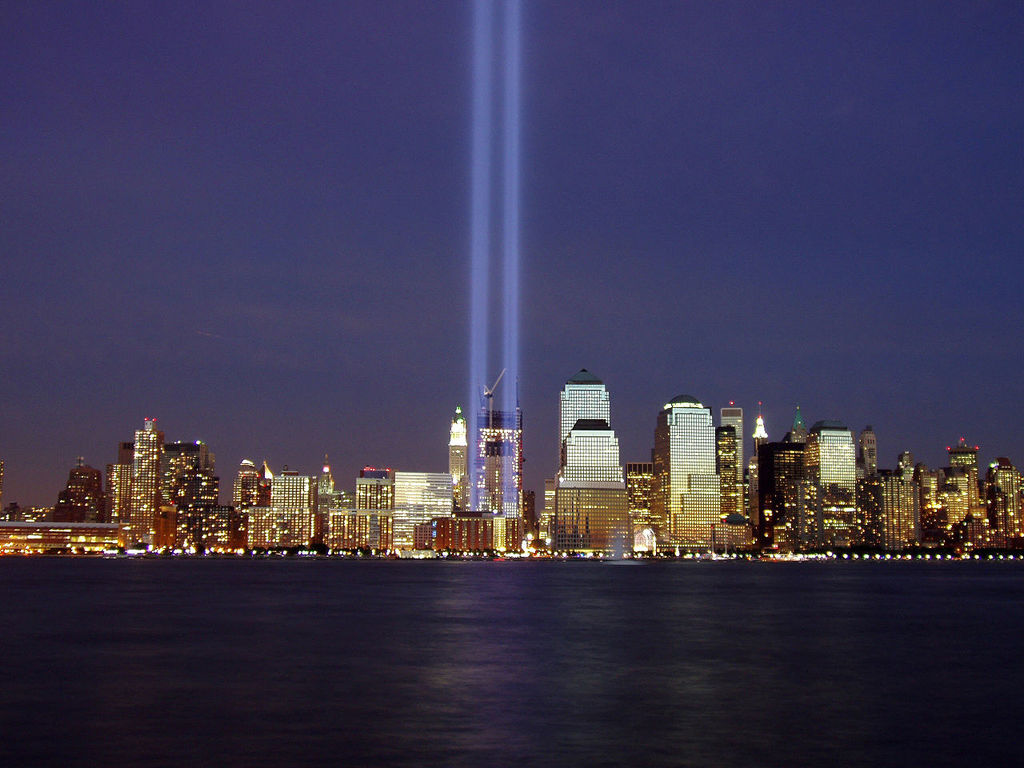
Photo by Royce Fonseca on Unsplash
About Post Author