Rising Profile and Claims
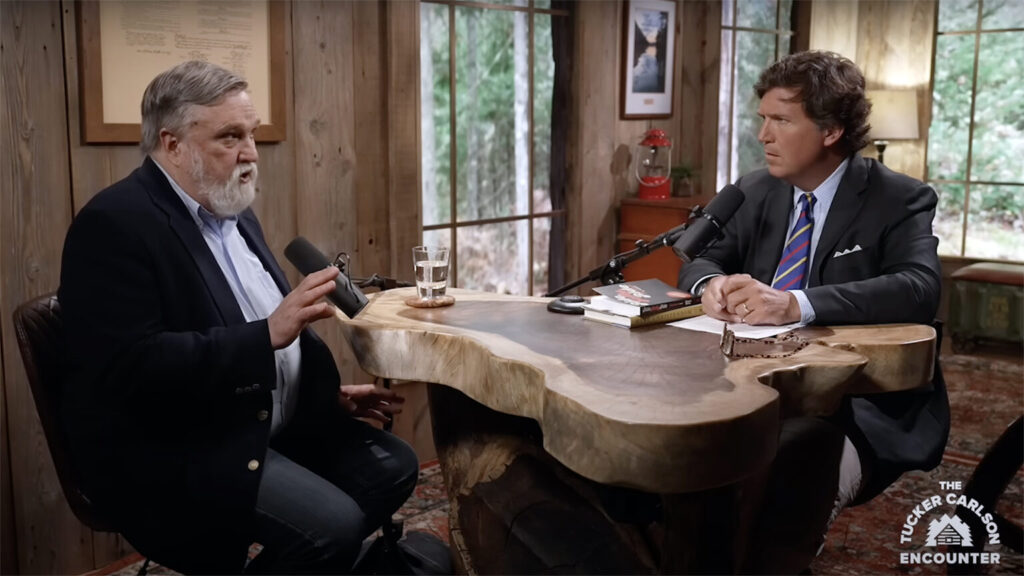
Idaho pastor Douglas Wilson is suddenly prominent. CNN profiled him, and he recently planted a church in Washington, D.C. The Secretary of Defense, Pete Hegseth, is a disciple. At NatCon 2025, Wilson framed a battle between two different “origin stories.” He says “regime historians” push a deist founding myth. He calls that narrative “lies” and “apostasy,” arguing that the United States was built as a Protestant “Christian Republic.” He casts universities as engines of error. In his telling, Christian nationalism is moving from fringe to mainstream. Once fringe within evangelicalism, he now draws mainstream attention and political allies seeking religious renewal.
Supporters’ Concerns and Assertions
Wilson fears a secular ‘rewriting’ of history, citing early state constitutions that upheld religious establishments and required Christian tests for office oaths. He and his ideological allies worry that elites deny America’s Christian roots. He claims that fifty of the fifty-six Declaration signers were “orthodox Christians.” He notes the Constitution’s “Year of Our Lord” closing and invokes Holy Trinity v. United States to brand America Christian. He even portrays Washington’s army as Calvinists. National Conservatives rally around this origin story, viewing it as a moral and political foundation, as well as a call to restore what they consider a divine order in public life and governance.
Scholarly Rebuttal and Detractors’ Concerns
John Fea, a historian with three decades in the field, pushes back. He knows no credentialed scholar teaching a thoroughly deist founding, calling Wilson’s history selective and tendentious. He says evidence complicates the Christian Republic thesis, and Wilson ignores contrary sources and nuance. Colonial church membership likely remained below fifty percent, with some estimates dropping as low as seventeen percent. Fea states the Founders’ beliefs varied widely, with few being pure deists, while others were Christians, and some rejected Christianity. All were Enlightenment thinkers. They designed safeguards to prevent religious privilege from creating a nation of people who elevated a single creed or enforced theological conformity.
Fea asks:
Would the creators of a Christian republic reject the idea of an established church or offer the free exercise of religion to all Americans, as they did in the First Amendment? If they were serious about building such a “Christian republic,” why didn’t they just openly declare that only Christians could run for office in the federal government? Why didn’t they make Christianity the official religion of the United States? History offered them plenty of examples of this sort of Christian civilization. In John Calvin’s Geneva and John Winthrop’s Massachusetts Bay, heretics were executed.
Evidence That Complicates the Narrative
The founders chose religious freedom over mere toleration. Jefferson excluded Christian doctrine from the Declaration of Independence, the Constitution bans religious tests for office, and the First Amendment protects the free exercise of religion for all. Early state practices varied, but many religious clauses were eliminated after the Revolution and during the Second Great Awakening. The Treaty of Tripoli declared that the nation was not founded on Christianity, and Revolutionary War diaries show uneven soldier piety. Washington (nominally Anglican), General Nathanael Greene (Quaker), and Ethan Allen (Diest) undercut a Calvinist army claim. “Year of Our Lord” was a common way to sign documents in that era and was likely a clerk’s addition. Fea argues that Wilson’s view erases the whole truth and complexity of U.S. history, reducing faith to a mere political identity.
Source:
The Christian Nationalist Rewriting American History
Photo by Candice Seplow on Unsplash
About Post Author